
Introduction
AI in healthcare is rapidly transforming the global medical industry. Artificial intelligence technologies are helping doctors diagnose diseases earlier, improve treatment outcomes, and manage healthcare systems more efficiently than ever before. With the increasing availability of medical data and advances in computing power, AI in healthcare has become one of the most exciting developments in modern medicine.
Healthcare systems worldwide face major challenges such as rising costs, shortage of medical professionals, and increasing numbers of patients with chronic diseases. AI in healthcare offers innovative solutions to these challenges by automating complex tasks, analyzing large datasets, and providing valuable insights to healthcare professionals.
In recent years, artificial intelligence systems have been used to detect cancer in medical scans, predict heart disease risks, assist in robotic surgeries, and even help discover new medicines. Hospitals and research institutions are increasingly adopting AI in healthcare technologies to improve efficiency and patient care.
As technology continues to evolve, AI in healthcare will likely become a fundamental part of medical practice. From early diagnosis to personalized treatment and remote monitoring, artificial intelligence has the potential to revolutionize every aspect of healthcare.
This article explores what AI in healthcare is, how it works, its real-world applications, and how it could shape the future of medicine.
What is AI in Healthcare?
AI in healthcare refers to the use of artificial intelligence technologies to analyze complex medical data and assist healthcare professionals in making clinical decisions. These technologies include machine learning algorithms, deep learning systems, and natural language processing tools.
Artificial intelligence systems can process vast amounts of medical information that would be impossible for humans to analyze manually. By identifying patterns in this data, AI in healthcare can help detect diseases earlier and recommend more effective treatments.
Medical data used by AI systems includes:
- Electronic health records
- Medical imaging scans
- Laboratory test results
- Genetic information
- Patient monitoring data
Through advanced algorithms, AI in healthcare can recognize patterns in these datasets and provide valuable insights to doctors and researchers.
Key Technologies Used in AI in Healthcare
Machine Learning
Machine learning allows computers to learn from data and improve their performance without explicit programming. In AI in healthcare, machine learning algorithms analyze medical data to detect patterns related to diseases and treatment outcomes.
Deep Learning
Deep learning is a type of machine learning that uses neural networks to analyze complex datasets such as medical images. Deep learning models are particularly effective in detecting abnormalities in X-rays, CT scans, and MRIs.
Natural Language Processing
Natural language processing enables computers to understand and interpret human language. In AI in healthcare, NLP helps analyze clinical notes, medical research papers, and patient records.
Predictive Analytics
Predictive analytics uses historical data to forecast future events. Hospitals use AI in healthcare predictive models to identify patients at risk of developing certain diseases.
How AI in Healthcare Works
The functioning of AI in healthcare involves several stages that transform raw medical data into useful insights for doctors.
1. Data Collection
Healthcare institutions generate enormous amounts of medical data every day. This data includes patient records, imaging scans, laboratory results, and wearable device information.
AI systems collect and store this data in secure databases.
2. Data Processing
Before analysis, the data must be cleaned and organized. This process removes errors, duplicates, and irrelevant information.
High-quality data is essential for accurate AI predictions.
3. Algorithm Training
Machine learning algorithms are trained using large datasets. During this training process, the algorithm learns to recognize patterns associated with specific diseases or medical conditions.
For example, an AI model trained on thousands of cancer images can learn to identify tumors in new scans.
4. Pattern Recognition
Once trained, the AI system analyzes new medical data to detect patterns. These patterns help identify potential health risks and diagnose diseases.
5. Decision Support
Finally, the AI system provides recommendations to healthcare professionals. Doctors use these insights to make informed decisions about patient care.
https://pmc.ncbi.nlm.nih.gov/articles/PMC8285156/
Real-World Uses of AI in Healthcare
The adoption of AI in healthcare has expanded rapidly across multiple medical fields. Here are some of the most important real-world applications.
1. Disease Diagnosis
One of the most significant applications of AI in healthcare is disease diagnosis.
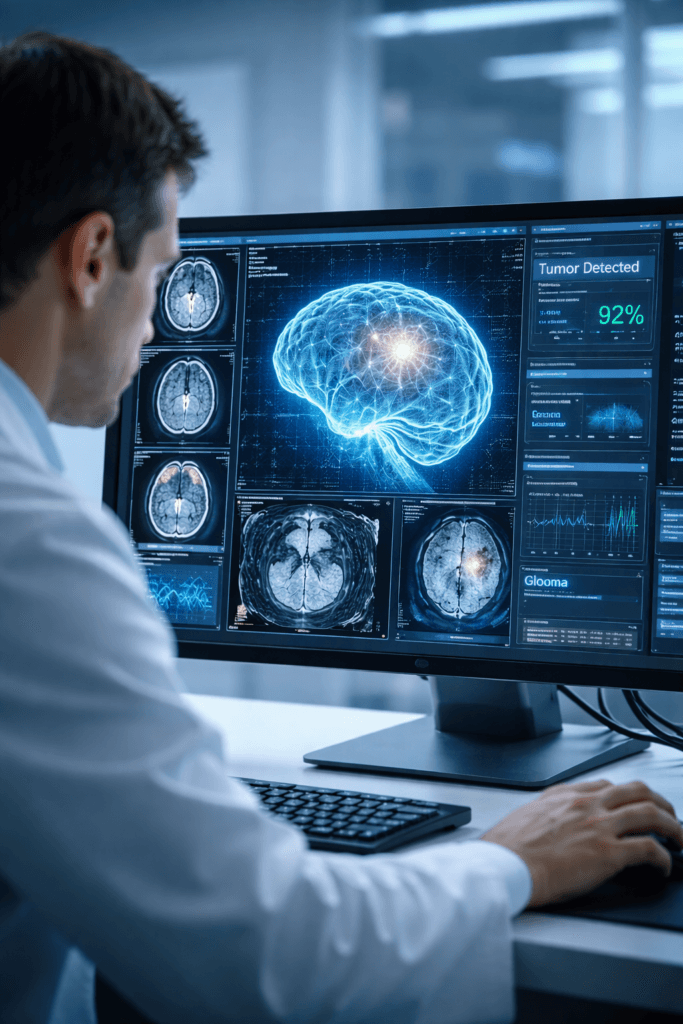
AI systems can analyze medical images with remarkable accuracy. These systems help detect diseases such as:
- Breast cancer
- Lung cancer
- Brain tumors
- Diabetic eye disease
In many cases, AI algorithms can identify abnormalities earlier than human doctors.
Recent studies have shown that AI can match or even exceed the diagnostic accuracy of experienced radiologists.
2. Drug Discovery
Developing new medicines is an expensive and time-consuming process. Traditional drug discovery can take more than a decade and cost billions of dollars.
AI in healthcare is accelerating this process by analyzing chemical compounds and predicting which ones are most likely to become effective medicines.
AI models can simulate biological interactions and identify promising drug candidates in a fraction of the time required by traditional methods.
This technology played an important role during the COVID-19 pandemic when researchers used AI tools to accelerate vaccine development.
3. Personalized Medicine
Every patient is unique, and treatments that work for one person may not work for another. AI in healthcare enables personalized medicine by analyzing individual patient data.
AI systems consider factors such as:
- Genetic information
- Medical history
- Lifestyle habits
- Environmental factors
Using this information, doctors can develop customized treatment plans tailored to each patient.
Personalized medicine improves treatment effectiveness and reduces side effects.
4. Robotic Surgery
AI-powered robotic systems are transforming surgical procedures.
These systems allow surgeons to perform highly precise operations using robotic instruments controlled by AI-assisted software.
Benefits of AI-assisted surgery include:
- Greater surgical precision
- Smaller incisions
- Faster recovery times
- Reduced risk of complications
Robotic surgery is increasingly used in fields such as cardiology, orthopedics, and neurosurgery.
5. Medical Imaging Analysis
Medical imaging generates enormous amounts of data. Analyzing these images manually can be time-consuming.
AI in healthcare imaging systems can automatically analyze scans and highlight areas that may require further examination.
These systems help radiologists detect subtle abnormalities that may otherwise be overlooked.
6. Virtual Health Assistants
AI-powered virtual assistants are becoming increasingly common in healthcare.
These digital tools help patients:
- Schedule appointments
- Track medications
- Monitor symptoms
- Receive health advice
Virtual assistants improve patient engagement and reduce the workload for healthcare professionals.
7. Remote Patient Monitoring
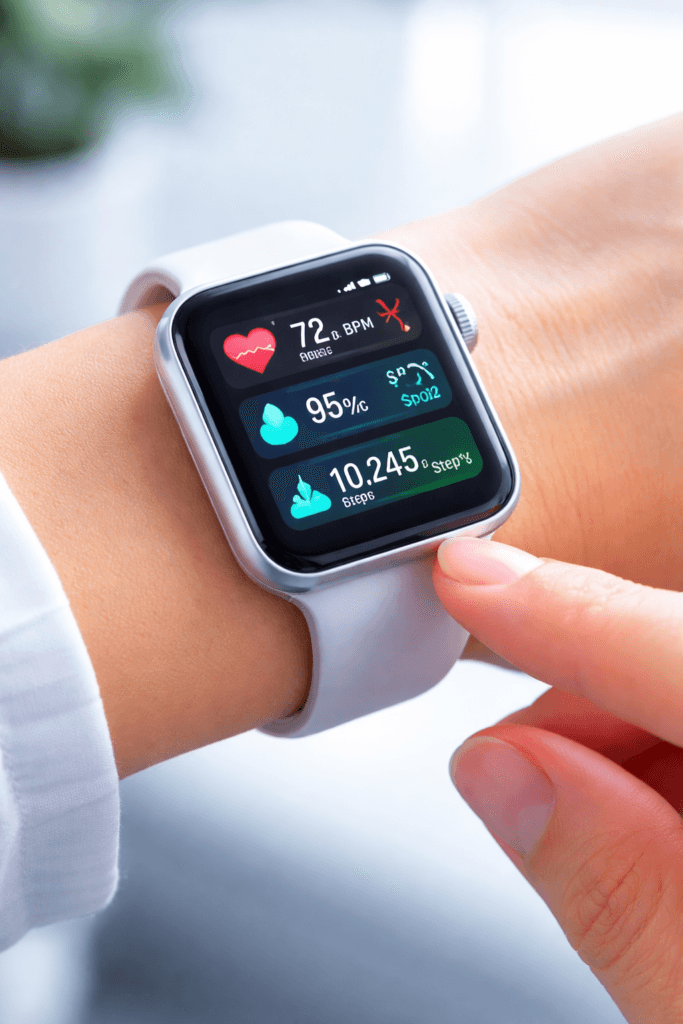
Wearable devices such as smartwatches and health trackers are enabling remote monitoring of patients.
These devices collect real-time data on:
- Heart rate
- Blood oxygen levels
- Physical activity
- Sleep patterns
AI systems analyze this data to detect early signs of health problems.
Remote monitoring is particularly useful for patients with chronic diseases such as diabetes and heart conditions.
8. Hospital Workflow Optimization
Hospitals generate large volumes of administrative data. AI in healthcare helps optimize hospital operations by improving scheduling, resource allocation, and patient management.
AI systems can predict patient admissions, helping hospitals prepare staff and resources accordingly.
9. Predicting Disease Outbreaks
Artificial intelligence can analyze global health data to predict disease outbreaks.
By monitoring factors such as climate conditions, travel patterns, and population density, AI systems can identify regions at risk of disease outbreaks.
This capability allows public health authorities to respond quickly and prevent widespread epidemics.
10. Medical Research Acceleration
Scientific research generates enormous amounts of data. AI in healthcare helps researchers analyze this data more efficiently.
AI tools can scan thousands of research papers, identify trends, and suggest new research directions.
This accelerates scientific discovery and improves our understanding of complex diseases.
https://www.weforum.org/stories/2025/08/ai-transforming-global-health
Benefits of AI in Healthcare
The adoption of AI in healthcare offers numerous advantages for patients, doctors, and healthcare systems.
Faster Diagnosis
AI can analyze medical data much faster than humans, enabling quicker diagnosis and treatment.
Improved Accuracy
AI algorithms reduce human error and improve diagnostic accuracy.
Reduced Healthcare Costs
Automation and efficiency improvements help reduce operational costs in hospitals.
Better Patient Outcomes
Earlier detection and personalized treatment plans lead to improved health outcomes.
Enhanced Accessibility
AI-powered telemedicine platforms make healthcare services accessible to people in remote areas.
https://www.foreseemed.com/artificial-intelligence-in-healthcare
https://www.arm.com/glossary/ai-in-healthcare
Challenges and Ethical Concerns
Despite its benefits, AI in healthcare also presents several challenges.
Data Privacy
Medical data is highly sensitive. Ensuring the security and privacy of patient data is a major concern.
Algorithm Bias
AI systems trained on biased datasets may produce unfair or inaccurate results.
Regulatory Issues
Healthcare technologies must meet strict regulatory standards before being widely adopted.
Cost of Implementation
Developing and implementing AI systems can be expensive for healthcare institutions.
The Future of AI in Healthcare
The future of AI in healthcare is incredibly promising. Researchers and technology companies are continuously developing new AI-powered medical tools.
Some future developments may include:
- AI-powered medical robots
- Real-time disease detection through wearable devices
- Fully automated medical imaging analysis
- AI-assisted mental health diagnosis
- Smart hospitals powered by artificial intelligence
As AI technologies continue to advance, healthcare systems will become more efficient, accurate, and accessible.
https://ep.jhu.edu/news/ai-in-healthcare-applications-and-impact/
Conclusion
AI in healthcare represents one of the most significant technological revolutions of the 21st century. By combining advanced algorithms with massive medical datasets, artificial intelligence is transforming the way diseases are diagnosed, treated, and prevented.
From improving diagnostic accuracy to accelerating drug discovery and enabling personalized medicine, AI in healthcare is reshaping the future of medicine. While challenges such as data privacy and ethical concerns must be addressed, the potential benefits are enormous.
In the coming years, AI will likely become an essential tool for healthcare professionals worldwide. Rather than replacing doctors, AI in healthcare will enhance their capabilities and help deliver better care to patients everywhere.



1 thought on “AI in Healthcare: 10 Powerful Breakthroughs Transforming Modern Medicine”