Introduction
Plastic pollution is one of the biggest environmental challenges facing the world today. Over the past few decades, the production and consumption of plastic products have increased dramatically. Plastic is used in packaging, clothing, electronics, medical equipment, and thousands of everyday items. However, scientists are now discovering a disturbing consequence of this widespread plastic use: microplastic in human body.
Microplastics are extremely small plastic particles that result from the breakdown of larger plastic products. These particles are often invisible to the naked eye and can easily enter ecosystems through water, air, and soil. Once microplastics are released into the environment, they can eventually enter the human body through food, drinking water, and even the air we breathe.
Recent scientific studies have revealed that microplastic in human body is far more common than previously believed. Researchers have detected microplastics in human blood, lungs, digestive systems, and even the placenta. These discoveries suggest that plastic pollution is not only an environmental problem but also a growing public health concern.
Understanding the sources, risks, and long-term effects of microplastic in human body is becoming an important focus of modern scientific research. In this article, we will explore what microplastics are, how they enter the human body, the potential health risks they pose, and what scientists predict about their impact on the future of human health.
What is Microplastic in Human Body
The term microplastic in human body refers to tiny plastic particles that enter and accumulate inside human tissues, organs, or biological systems. These particles are usually less than 5 millimeters in size, although some may be even smaller and measured in micrometers or nanometers.
Microplastics are created when plastic materials break down due to environmental processes such as sunlight exposure, heat, friction, and chemical reactions. Over time, large plastic objects gradually fragment into smaller pieces, eventually becoming microplastics.
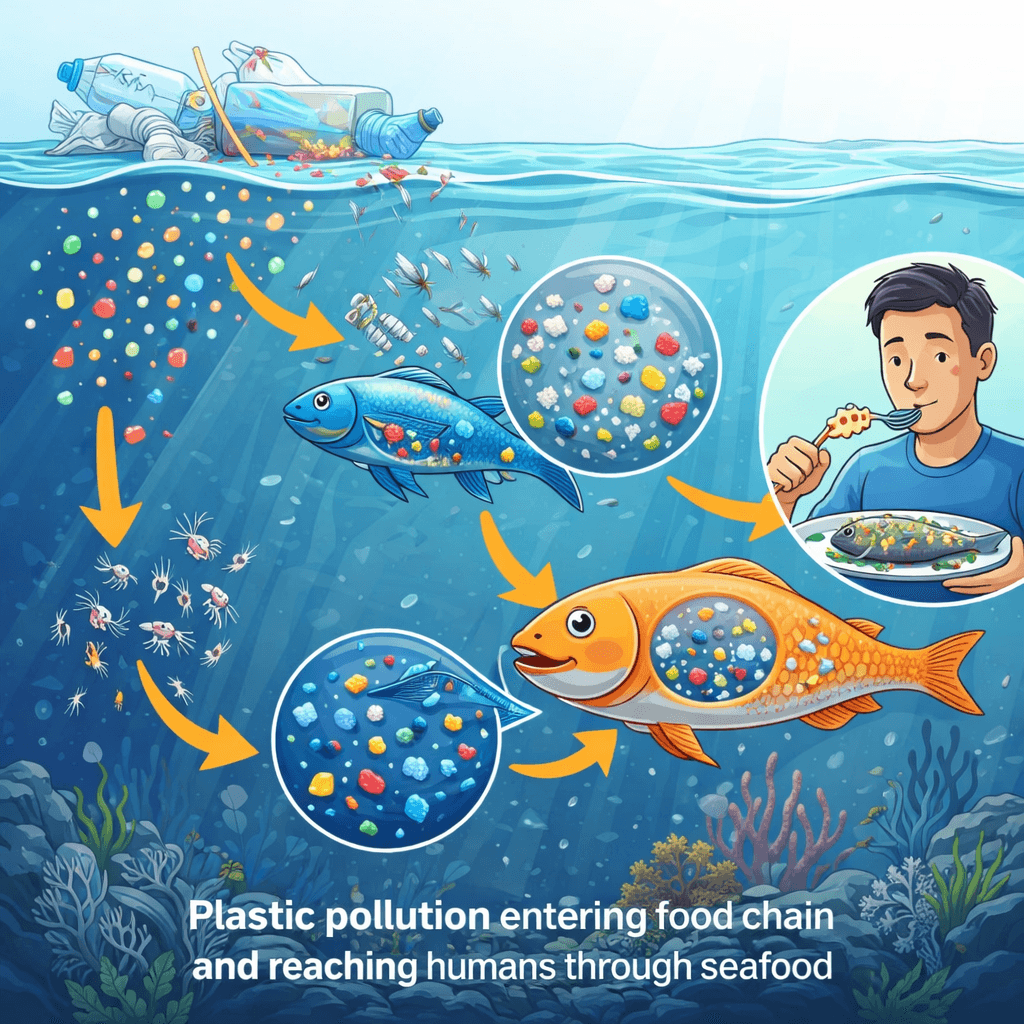
Because these particles are extremely small, they can easily enter food chains and biological systems. Once ingested or inhaled, they may travel through different parts of the body.
https://pmc.ncbi.nlm.nih.gov/articles/PMC11342020/
Types of Microplastics
Scientists generally classify microplastics into two main categories.
Primary Microplastics
Primary microplastics are intentionally manufactured small plastic particles used in various commercial products.
Examples include:
- Microbeads used in cosmetic products
- Plastic abrasives used in cleaning agents
- Industrial plastic pellets used in manufacturing
- Plastic particles used in toothpaste and personal care products
These tiny plastic particles often enter water systems through wastewater and eventually reach rivers and oceans.
Secondary Microplastics
Secondary microplastics form when larger plastic products break down over time.
Common sources include:
- Plastic bottles
- Food packaging
- Synthetic clothing fibers
- Plastic bags
- Fishing nets and ropes
As these products degrade, they release tiny plastic fragments into the environment. These fragments may eventually enter food chains and contribute to microplastic in human body exposure.
How Microplastic in Human Body Occurs
Scientists have identified several major pathways through which microplastic in human body contamination occurs.
These pathways involve everyday activities such as eating, drinking, and breathing.
Food Consumption
One of the most significant ways microplastics enter the human body is through food. Researchers have found microplastics in a wide range of food products consumed around the world.
Foods containing microplastics may include:
- Seafood
- Table salt
- Honey
- Fruits and vegetables
- Packaged foods
Marine animals often consume plastic particles floating in oceans. When humans eat fish or shellfish, these particles may be transferred to the human digestive system.
Studies estimate that people may consume thousands of microplastic particles every year through food alone.
https://www.bbc.com/future/article/20250723-how-do-the-microplastics-in-our-bodies-affect-our-health
Drinking Water
Drinking water is another major source of microplastic in human body contamination.
Research has shown that both bottled water and tap water may contain microplastic particles. Plastic packaging, environmental pollution, and wastewater contamination all contribute to microplastic presence in water supplies.
A global study analyzing bottled water samples found that over 90 percent of the samples contained microplastic particles. These particles likely originate from plastic bottles and packaging materials.
Air Inhalation
Microplastics are also present in the air. Tiny plastic fibers released from clothing, furniture, carpets, and industrial processes can float in the atmosphere.
When people breathe in these particles, they may accumulate in the respiratory system. Over time, inhalation of microplastics may contribute to microplastic in human body contamination in lung tissues.
Indoor environments often contain higher levels of airborne microplastics due to synthetic materials used in clothing and household products.
Plastic Packaging and Containers
Plastic containers used for food storage and packaging may release microplastic particles under certain conditions.
Examples include:
- Heating food in plastic containers
- Storing hot beverages in plastic bottles
- Using plastic wrap on warm food
Heat and friction can cause plastic materials to degrade and release small particles. These particles may then enter the food and contribute to microplastic in human body exposure.
Real-World Evidence of Microplastic in Human Body
Scientific research over the past decade has provided increasing evidence that microplastic in human body contamination is widespread.
Microplastics in Human Blood
In 2022, scientists detected microplastic particles in human blood samples for the first time. This discovery confirmed that plastic particles can circulate throughout the human body via the bloodstream.
Researchers identified plastics such as polyethylene and polystyrene in blood samples collected from volunteers.
The presence of these particles suggests that microplastic in human body exposure may allow plastics to reach vital organs.
Microplastics in Human Lungs
Another study examining lung tissue samples discovered microplastic fibers embedded within lung tissue.
These fibers likely entered the body through inhalation of airborne plastic particles. This finding suggests that breathing polluted air may contribute significantly to microplastic in human body contamination.
Microplastics in the Placenta
Researchers studying placental tissue from pregnant women discovered microplastic particles within the placenta. This finding raised concerns that microplastics may reach developing fetuses.
The presence of microplastic in human body during pregnancy could have unknown effects on fetal development.
Microplastics in Human Stool
Scientists have also detected microplastic particles in human stool samples collected from volunteers in different countries.
This evidence confirms that humans regularly ingest microplastics through food and water.
Health Risks of Microplastic in Human Body
Scientists are still studying the long-term effects of microplastic in human body, but several potential risks have already been identified.
Inflammation
Microplastic particles may trigger immune responses in the body. When foreign particles enter tissues, the immune system may react by causing inflammation.
Chronic inflammation is associated with various diseases such as:
- Heart disease
- Arthritis
- Diabetes
- Autoimmune disorders
Chemical Exposure
Plastics often contain chemical additives used during manufacturing.
These chemicals include:
- Bisphenol A (BPA)
- Phthalates
- Flame retardants
- Heavy metals
When microplastics enter the body, these chemicals may be released and interfere with hormonal systems.

Cellular Damage
Laboratory studies suggest that microplastics may cause oxidative stress within cells. Oxidative stress occurs when harmful molecules damage cellular structures.
Over time, this damage may contribute to chronic diseases.
Digestive System Effects
Microplastics present in the digestive tract may interfere with gut bacteria that help regulate digestion and immunity.
Disruption of the gut microbiome may lead to digestive problems and reduced immune function.
Environmental Causes Behind Microplastic in Human Body
The widespread presence of microplastic in human body is closely connected to global plastic pollution.
Each year, millions of tons of plastic waste enter oceans and natural environments. Over time, environmental processes break this plastic into microscopic particles.
Major sources include:
- Single-use plastic packaging
- Synthetic clothing fibers
- Industrial plastic waste
- Tire particles from vehicles
These particles eventually enter ecosystems and food chains, contributing to human exposure.
Future Impact of Microplastic in Human Body
The future impact of microplastic in human body could become more serious if plastic pollution continues to increase.
Scientists predict several possible developments.
Increased Scientific Research
More studies will likely focus on understanding how microplastics interact with human cells and tissues.
Improved Detection Technology
New technologies may allow scientists to measure microplastic levels in human organs more accurately.
Stricter Environmental Policies
Governments may introduce regulations limiting plastic production and encouraging sustainable materials.
Development of Plastic Alternatives
Biodegradable materials may replace conventional plastics in many products.
How to Reduce Microplastic Exposure
Although avoiding microplastic in human body completely may be impossible, several lifestyle changes may reduce exposure.
Practical Steps
- Drink filtered water
- Avoid heating food in plastic containers
- Choose glass or stainless steel bottles
- Reduce single-use plastic consumption
- Wear clothing made from natural fibers
Small changes in daily habits may help reduce the amount of microplastic entering the human body.
Conclusion
The discovery of microplastic in human body highlights a hidden consequence of global plastic pollution. Tiny plastic particles are entering our bodies through food, water, and air, raising important questions about their potential health effects.
Although scientists are still investigating the long-term risks, the presence of microplastics in human tissues suggests that plastic pollution is no longer just an environmental issue. It is also a human health issue.
Reducing plastic pollution will require global cooperation among governments, industries, scientists, and individuals. By reducing plastic use and improving waste management, society can limit future exposure to microplastics.
The issue of microplastic in human body reminds us that protecting the environment ultimately means protecting human health.
Frequently Asked Questions About Microplastic in Human Body
1. What is microplastic in human body?
Microplastic in human body refers to tiny plastic particles that enter and accumulate inside human tissues or organs. These particles are usually smaller than 5 millimeters and may enter the body through food, drinking water, and air.
Scientists have discovered microplastics in human blood, lungs, digestive systems, and even the placenta, indicating that these particles can travel through the body.
2. How does microplastic enter the human body?
There are several ways microplastic in human body exposure occurs.
Common sources include:
- Eating seafood contaminated with plastic particles
- Drinking bottled or tap water containing microplastics
- Breathing airborne plastic fibers
- Consuming food stored in plastic containers
These particles can enter the digestive or respiratory system and potentially circulate in the bloodstream.
3. Is microplastic in human body dangerous?
Scientists are still studying the health effects of microplastic in human body, but early research suggests potential risks.
Possible concerns include:
- Inflammation in tissues
- Chemical exposure from plastic additives
- Cellular damage
- Disruption of the digestive microbiome
More research is needed to understand long-term health impacts.
4. How much microplastic does a human consume?
Studies estimate that humans may consume tens of thousands of microplastic particles each year through food and drinking water.
Some researchers suggest that the average person may ingest around 50,000 microplastic particles annually, depending on diet and lifestyle.
5. Can microplastic be removed from the human body?
Currently, scientists do not fully understand how the body processes microplastic in human body. Some particles may pass through the digestive system and exit through waste.
However, very small particles may remain trapped in tissues or organs, which is why researchers are studying their long-term effects.
6. What foods contain the most microplastics?
Foods that commonly contain microplastics include:
- Seafood such as fish and shellfish
- Table salt
- Honey
- Bottled water
- Processed foods packaged in plastic
These foods may contribute to microplastic in human body exposure.
7. Are microplastics found in human blood?
Yes. In 2022, scientists detected microplastic particles in human blood samples for the first time. This discovery showed that microplastic in human body can circulate through the bloodstream and potentially reach different organs.
8. Can microplastics reach unborn babies?
Researchers have detected microplastic particles in the placenta of pregnant women. This suggests that microplastic in human body exposure may reach developing fetuses, although scientists are still studying the health implications.
9. How can you reduce microplastic exposure?
Although avoiding microplastics completely is difficult, you can reduce microplastic in human body exposure by:
- Drinking filtered water
- Avoiding heating food in plastic containers
- Using glass or stainless steel bottles
- Reducing single-use plastics
- Choosing natural fiber clothing
These steps may help limit plastic particles entering the body.
10. Why are scientists concerned about microplastic in human body?
Scientists are concerned because microplastic in human body may carry toxic chemicals and potentially cause inflammation or cellular damage.
Since microplastics are now found in human tissues, researchers are working to understand how they may affect long-term health.
11. Are microplastics found in drinking water?
Yes. Many studies have detected microplastic particles in both tap water and bottled water. Plastic packaging and environmental contamination are major sources of these particles.
Drinking water is considered one of the main pathways contributing to microplastic in human body exposure.
12. Will microplastic pollution increase in the future?
If plastic production continues to grow, scientists predict that microplastic in human body exposure may increase in the future. However, efforts to reduce plastic waste and develop biodegradable materials may help reduce this problem.