
Introduction
Modern biotechnology has reached an incredible milestone with the discovery of CRISPR gene editing. Scientists can now precisely edit DNA, similar to how we edit text in a document. For people curious about genetics and biotechnology, CRISPR gene editing explained for beginners is one of the most fascinating topics in modern science.
This powerful technology allows researchers to remove, modify, or replace genes inside living organisms. From curing genetic diseases to improving crops and fighting viruses, CRISPR has the potential to transform medicine, agriculture, and biotechnology.
In this guide, we will explore CRISPR gene editing explained for beginners in simple language. You will learn how CRISPR works, why it is revolutionary, its real-world applications, and the ethical debates surrounding this groundbreaking technology.
What Is CRISPR Gene Editing?
When discussing CRISPR gene editing explained for beginners, it is important to first understand what CRISPR actually means.
CRISPR stands for:
Clustered Regularly Interspaced Short Palindromic Repeats
These are sequences found naturally in the DNA of bacteria. Scientists discovered that bacteria use CRISPR as a defense system against viruses.
When a virus attacks bacteria:
- The bacteria capture a piece of the virus’s DNA.
- That DNA is stored in the CRISPR region.
- If the virus attacks again, the bacteria recognize and destroy it.
Scientists realized they could adapt this system to edit genes in plants, animals, and humans.
This discovery led to the modern concept of CRISPR gene editing explained for beginners, where researchers use the system like molecular scissors to cut DNA at specific locations.
Why CRISPR Gene Editing Is Revolutionary
Understanding CRISPR gene editing explained for beginners becomes easier when we compare it to older gene editing technologies.
Before CRISPR, gene editing methods were:
- Expensive
- Slow
- Difficult to design
- Less precise
CRISPR changed everything.
Key advantages of CRISPR
- Highly precise gene editing
- Much cheaper than older techniques
- Faster research results
- Easy to design genetic changes
Because of these advantages, CRISPR has become one of the most important discoveries in biotechnology in the last 50 years.
In fact, the scientists who developed CRISPR gene editing, Jennifer Doudna and Emmanuelle Charpentier, received the 2020 Nobel Prize in Chemistry.
How CRISPR Gene Editing Works
To understand CRISPR gene editing explained for beginners, imagine editing a sentence in a document.
For example:
Original sentence:
“The cat sat on the mat.”
You can delete, replace, or insert words.
CRISPR works the same way with DNA.
The CRISPR system has three main components
1. Guide RNA (gRNA)
This is a small piece of RNA that guides the system to a specific DNA sequence.
Think of it as a GPS that locates the gene to edit.
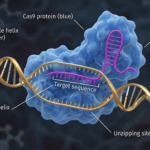
2. Cas9 Enzyme
Cas9 acts like molecular scissors.
Once the guide RNA finds the target DNA, Cas9 cuts the DNA strand.
3. DNA Repair Mechanism
After the DNA is cut, the cell repairs it.
Scientists can use this repair process to:
- Disable a gene
- Insert a new gene
- Correct a mutation
This process forms the foundation of CRISPR gene editing explained for beginners.
Real-World Applications of CRISPR Gene Editing
CRISPR is already transforming multiple industries.
1. Treating Genetic Diseases
Many diseases are caused by faulty genes.
CRISPR can potentially fix these errors.
Examples include:
- Sickle cell anemia
- Cystic fibrosis
- Huntington’s disease
- Muscular dystrophy
In 2023, clinical trials showed CRISPR therapy successfully treated patients with sickle cell disease.
This breakthrough shows the real power of CRISPR gene editing explained for beginners.
2. Cancer Treatment
Researchers are using CRISPR to modify immune cells.
These modified cells can:
- Identify cancer cells
- Attack tumors more effectively
This technology is being tested in experimental cancer immunotherapies.
3. Fighting Infectious Diseases
CRISPR could help combat viruses such as:
- HIV
- COVID-19
- Influenza
Scientists are developing CRISPR-based diagnostic tools that detect viruses within minutes instead of hours.
4. Improving Crops
Agriculture also benefits from CRISPR.
Scientists can develop crops that are:
- Drought resistant
- Pest resistant
- More nutritious
- Higher yielding
Examples include:
- CRISPR-edited tomatoes
- Disease-resistant wheat
- Improved rice varieties
These advances are often discussed in CRISPR gene editing explained for beginners guides.
5. Eliminating Genetic Diseases Before Birth
CRISPR could potentially correct genetic mutations in embryos.
However, this area raises major ethical concerns and remains heavily regulated.
CRISPR Gene Editing in Agriculture
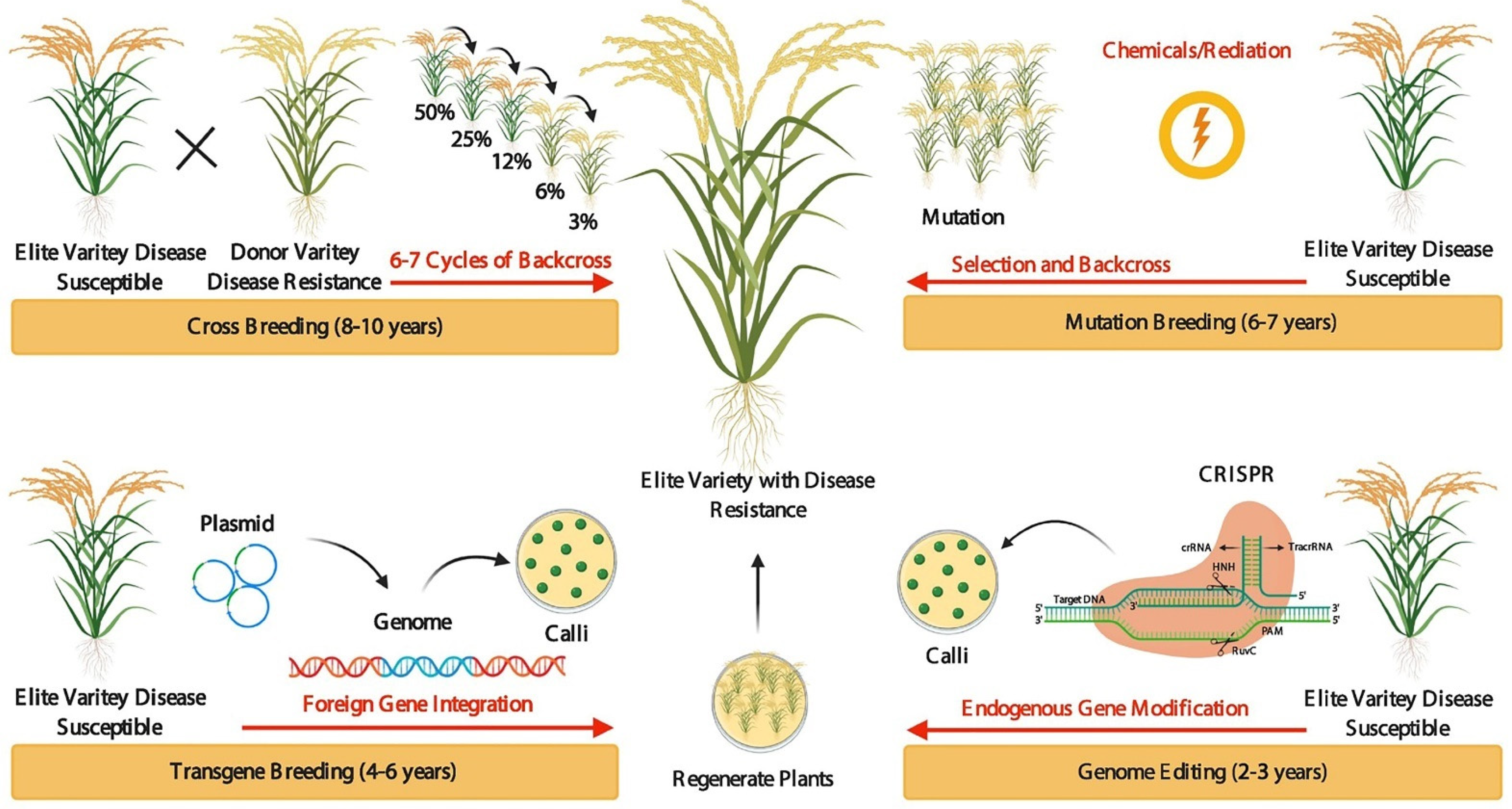

Agriculture is one of the most promising areas where CRISPR gene editing explained for beginners becomes practical.
Global food demand is increasing rapidly. Scientists estimate the world population may reach 9.7 billion by 2050.
CRISPR could help solve food shortages by creating crops that:
- Grow faster
- Survive climate change
- Require fewer pesticides
- Produce higher nutrition
For example:
Researchers created high-yield rice varieties using CRISPR that grow faster and produce more grains.
This technology may play a major role in future food security.
CRISPR Gene Editing in Medicine


Medicine is the field where CRISPR gene editing explained for beginners becomes truly revolutionary.
Potential medical breakthroughs include:
1. Gene Therapy
Correct faulty genes responsible for inherited diseases.
2. Personalized Medicine
Doctors could design treatments based on a patient’s genetic makeup.
3. Organ Transplant Improvements
CRISPR may allow scientists to modify animal organs to make them compatible with humans.
4. Faster Drug Development
Pharmaceutical companies use CRISPR to test new drug targets.
Ethical Concerns Around CRISPR Gene Editing
Despite its potential, CRISPR raises serious ethical questions.
Major concerns include
1. Designer Babies
Some fear CRISPR could allow parents to choose traits like:
- Height
- Intelligence
- Eye color
This idea raises concerns about genetic inequality.
2. Genetic Mistakes
CRISPR is precise but not perfect.
Possible risks include:
- Editing the wrong gene
- Unexpected mutations
- Long-term health effects
3. Biosecurity Risks
Some experts worry CRISPR could potentially be misused to create dangerous biological agents.
Because of these concerns, many governments regulate human gene editing research.
Major Breakthroughs in CRISPR Research
Understanding CRISPR gene editing explained for beginners also requires knowing key milestones.
Important CRISPR achievements
- 2012: CRISPR adapted for gene editing in laboratories
- 2015: First human embryo experiments
- 2018: Controversial gene-edited babies announced in China
- 2020: Nobel Prize awarded for CRISPR discovery
- 2023–2024: First approved CRISPR therapy for sickle cell disease
These breakthroughs show how quickly the field is advancing.
Advantages of CRISPR Technology
Here are the major benefits:
- Extremely precise gene targeting
- Low cost compared to older gene editing methods
- Faster experimentation
- Potential cures for genetic diseases
- Improved agricultural productivity
These advantages are why CRISPR gene editing explained for beginners is becoming a popular science topic worldwide.
Limitations of CRISPR
Despite its promise, CRISPR still has challenges.
Current limitations include
- Off-target gene edits
- Ethical concerns
- Complex regulation
- Delivery of CRISPR into cells
- Long-term safety uncertainties
Researchers are actively working to improve the technology.
The Future of CRISPR Gene Editing
Scientists believe CRISPR could reshape medicine and biotechnology.
Future possibilities include:
- curing hundreds of genetic diseases
- creating climate-resistant crops
- preventing pandemics
- regenerating damaged organs
- slowing aging processes
Experts predict the global gene editing market could exceed $15 billion by 2030.
This rapid growth makes CRISPR gene editing explained for beginners an important topic for students, researchers, and technology enthusiasts.
Conclusion
CRISPR has fundamentally changed the way scientists interact with DNA. With its ability to precisely edit genes, this technology offers incredible possibilities for medicine, agriculture, and biotechnology.
Understanding CRISPR gene editing explained for beginners helps us appreciate both the power and responsibility that come with such transformative technology. While CRISPR could cure diseases and improve food production, it also raises important ethical and safety concerns.
As research continues, CRISPR will likely play a major role in shaping the future of science and human health. The coming decades may reveal breakthroughs that were once considered impossible.
1. What is CRISPR gene editing in simple terms?
CRISPR gene editing is a technology that allows scientists to cut and modify DNA inside living organisms to correct genetic problems or add new traits.
2. Why is CRISPR important?
CRISPR is important because it allows precise and affordable gene editing that could help treat genetic diseases and improve agriculture.
3. Who discovered CRISPR?
Scientists Jennifer Doudna and Emmanuelle Charpentier developed CRISPR gene editing and won the Nobel Prize in 2020.
4. Can CRISPR cure genetic diseases?
CRISPR has already shown success in treating conditions like sickle cell disease and may help cure many inherited disorders in the future.
5. Is CRISPR safe?
CRISPR is promising but still under research. Scientists continue studying its long-term safety and accuracy.
6. What diseases could CRISPR treat?
6. What diseases could CRISPR treat?
Potential targets include:
Sickle cell anemia
Cystic fibrosis
Huntington’s disease
Certain cancers
7. Can CRISPR edit human embryos?
7. Can CRISPR edit human embryos?
Technically yes, but most countries heavily regulate or prohibit human embryo gene editing.
8. Is CRISPR used in agriculture?
Yes. CRISPR helps create crops that are more resistant to pests, diseases, and climate change.
9. What is the Cas9 enzyme?
Cas9 is a protein that acts like molecular scissors to cut DNA at specific locations during CRISPR gene editing
10. What is the future of CRISPR technology?
CRISPR could revolutionize medicine, agriculture, and biotechnology, potentially curing many genetic diseases.



2 thoughts on “CRISPR Gene Editing Explained for Beginners: How Scientists Are Rewriting DNA”