The recent Iran US Israel war brought one weapon system back into the global spotlight: ballistic missiles used in recent Iran US Israel war. These long‑range weapons dominated headlines, military briefings, and social media debates.
In simple words, ballistic missiles are rockets that fly into space and then fall back toward their targets, carrying explosive warheads over hundreds or even thousands of kilometers. In the Iran–Israel–US confrontation, they were not just tools of destruction, but powerful symbols of deterrence, technology, and political messaging.
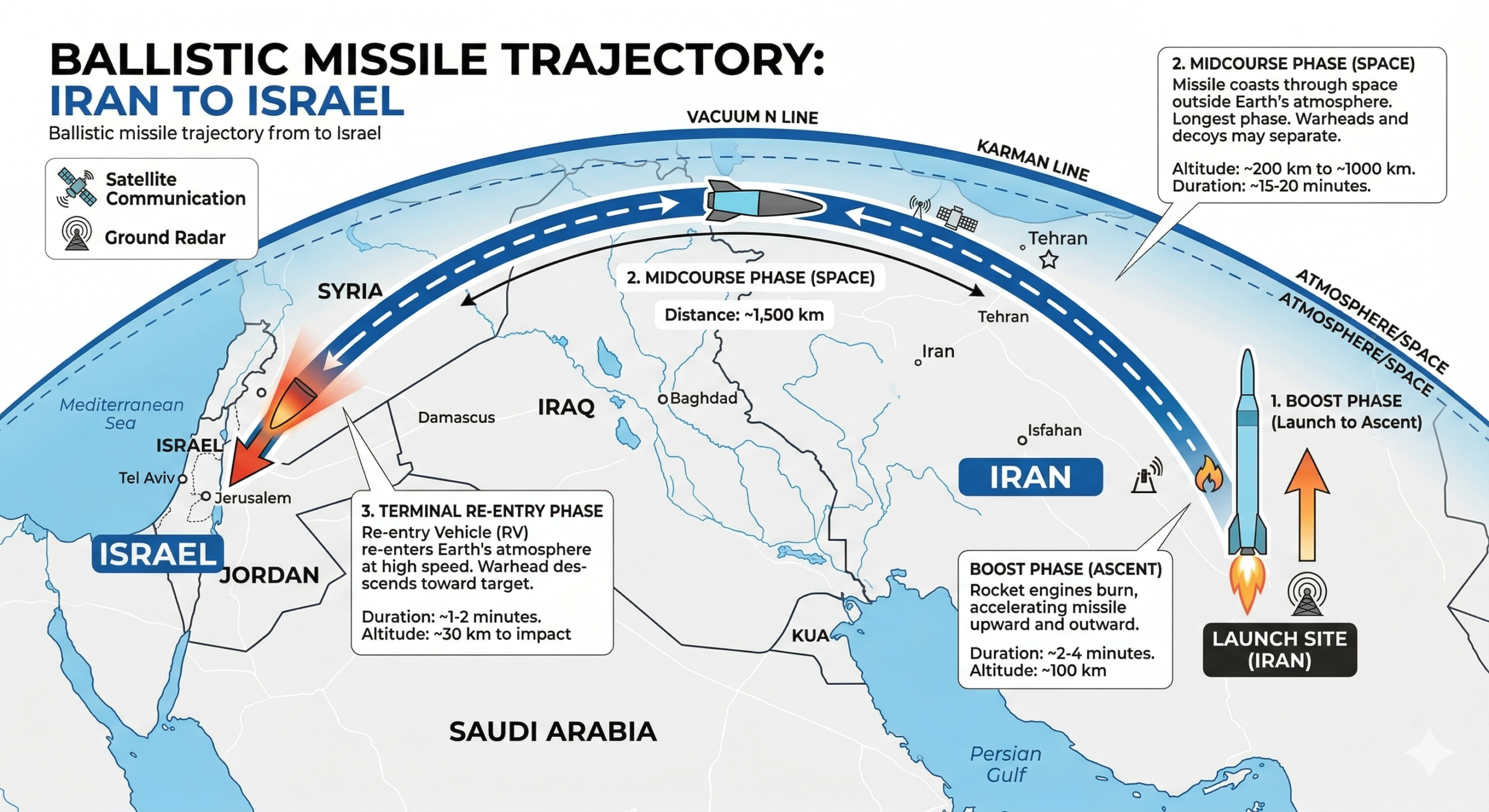
Ballistic missiles are guided rockets that follow a curved path, called a ballistic trajectory, after their engines stop burning.
They are different from cruise missiles, which fly low in the atmosphere and are powered throughout their flight like small aircraft.
Key points about ballistic missiles:
They are launched almost straight up at first.
They travel outside the atmosphere for part of their journey.
Gravity pulls them down toward the target at very high speed.
Because of their speed and range, ballistic missiles are considered strategic weapons in modern warfare.
Why Ballistic Missiles Matter in the Iran US Israel War
In the recent confrontation, ballistic missiles used in recent Iran US Israel war were not only meant to hit targets.
They also served these deeper purposes:
Sending a political message of strength.
Testing the enemy’s air defenses.
Signaling to allies and rivals how far each side is willing to go.
When Iran launched ballistic missiles toward Israel, it was presenting its missile power to the world and challenging Israel’s highly advanced air‑defense network. The United States, as Israel’s key ally, was also directly involved through intelligence, detection, and interception support.
Short Overview of the Iran–Israel–US Tensions
To understand the role of ballistic missiles, you first need a quick picture of the conflict.
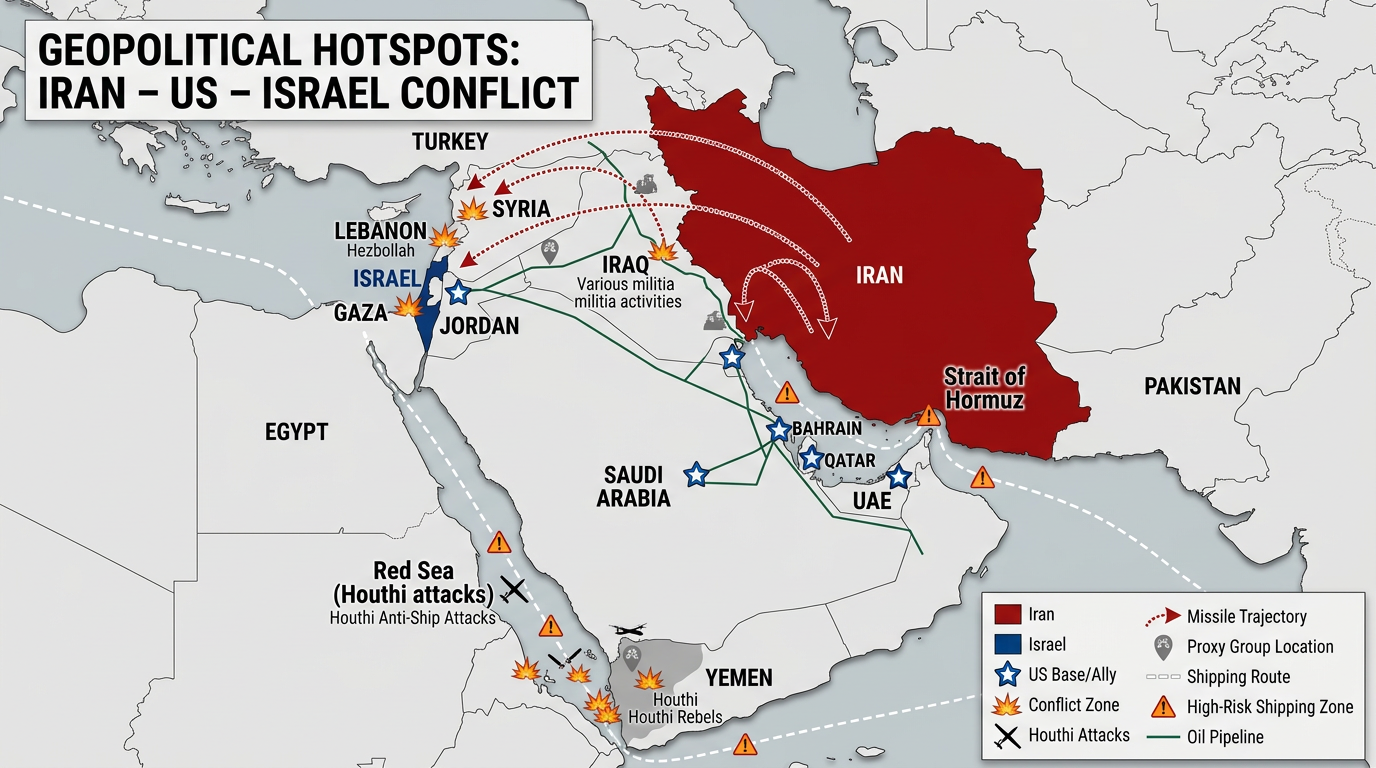
Iran and Israel have been rivals for decades, with tensions over nuclear programs, regional influence, and support for different groups in the Middle East.
In the recent Iran US Israel war‑like situation:
Iran launched waves of drones and ballistic missiles towards Israel.
Israel responded with its layered defense systems and limited counter‑strikes.
The US provided support in detecting, tracking, and intercepting some incoming threats.
This was one of the first times Iran openly claimed a direct large‑scale strike on Israel, rather than only working through proxies. That is why ballistic missiles used in recent Iran US Israel war drew so much global interest.
How Ballistic Missiles Work in Simple Terms
Many people find missile technology confusing, but the basic idea is easy to understand.
You can think of a ballistic missile as a stone thrown in the air, but on a much larger and more precise scale.
Main Stages of a Ballistic Missile Flight
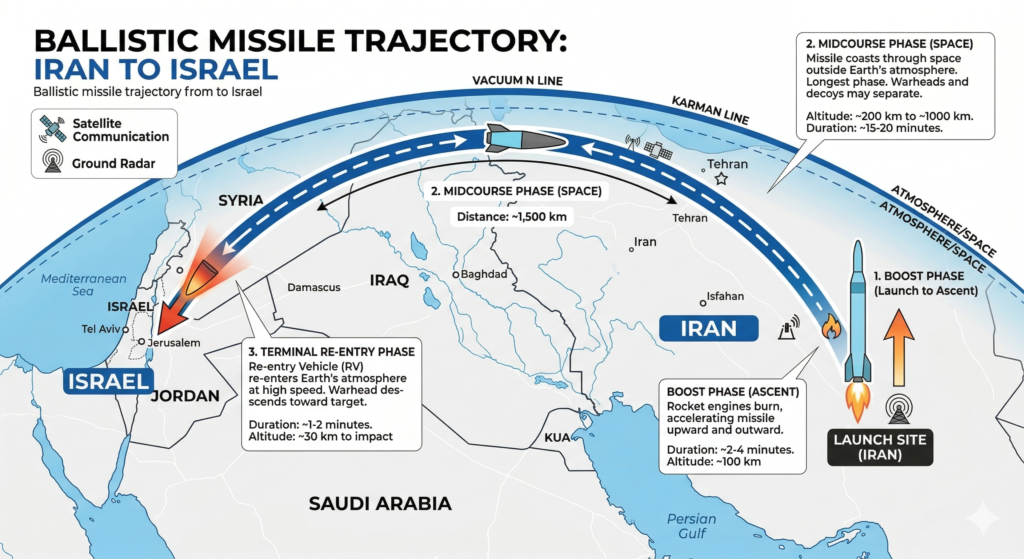
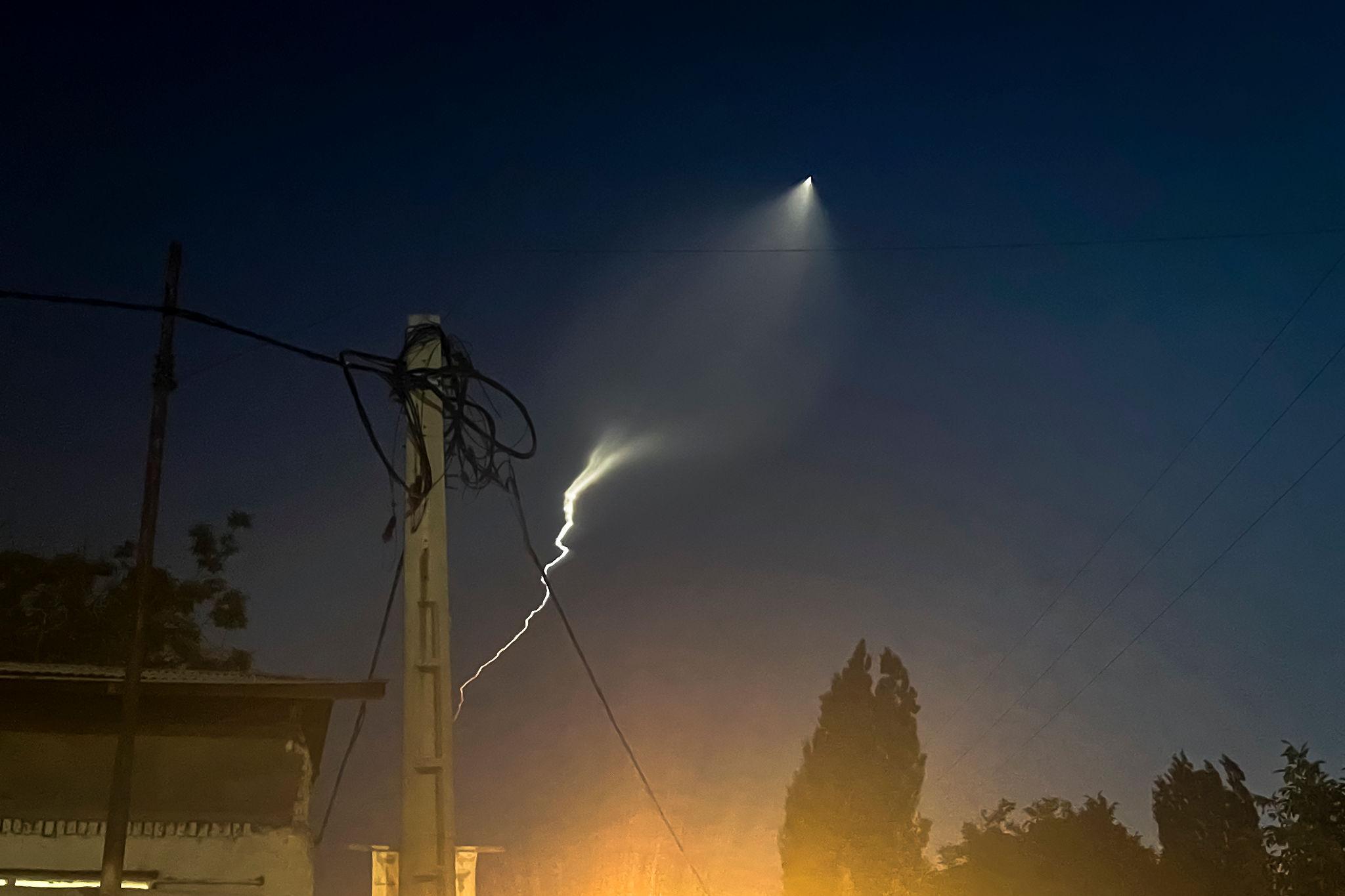
Boost Phase The engines fire for a few minutes, pushing the missile upward out of the atmosphere. This is when the missile is easiest to detect because of its hot exhaust plume.
Midcourse Phase The engines shut off, and the missile coasts in space. It may release several warheads or decoys.
Terminal Phase The warhead re‑enters the atmosphere at high speed. This is when air defenses try to intercept it before impact.
This three‑stage pattern is what makes ballistic missiles used in recent Iran US Israel war both powerful and hard to stop.
Types of Ballistic Missiles Involved
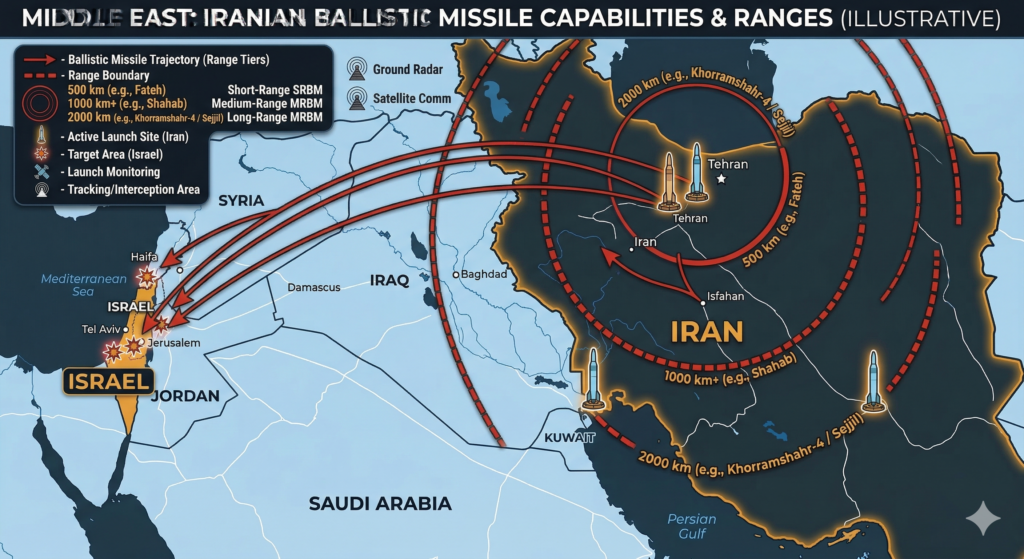
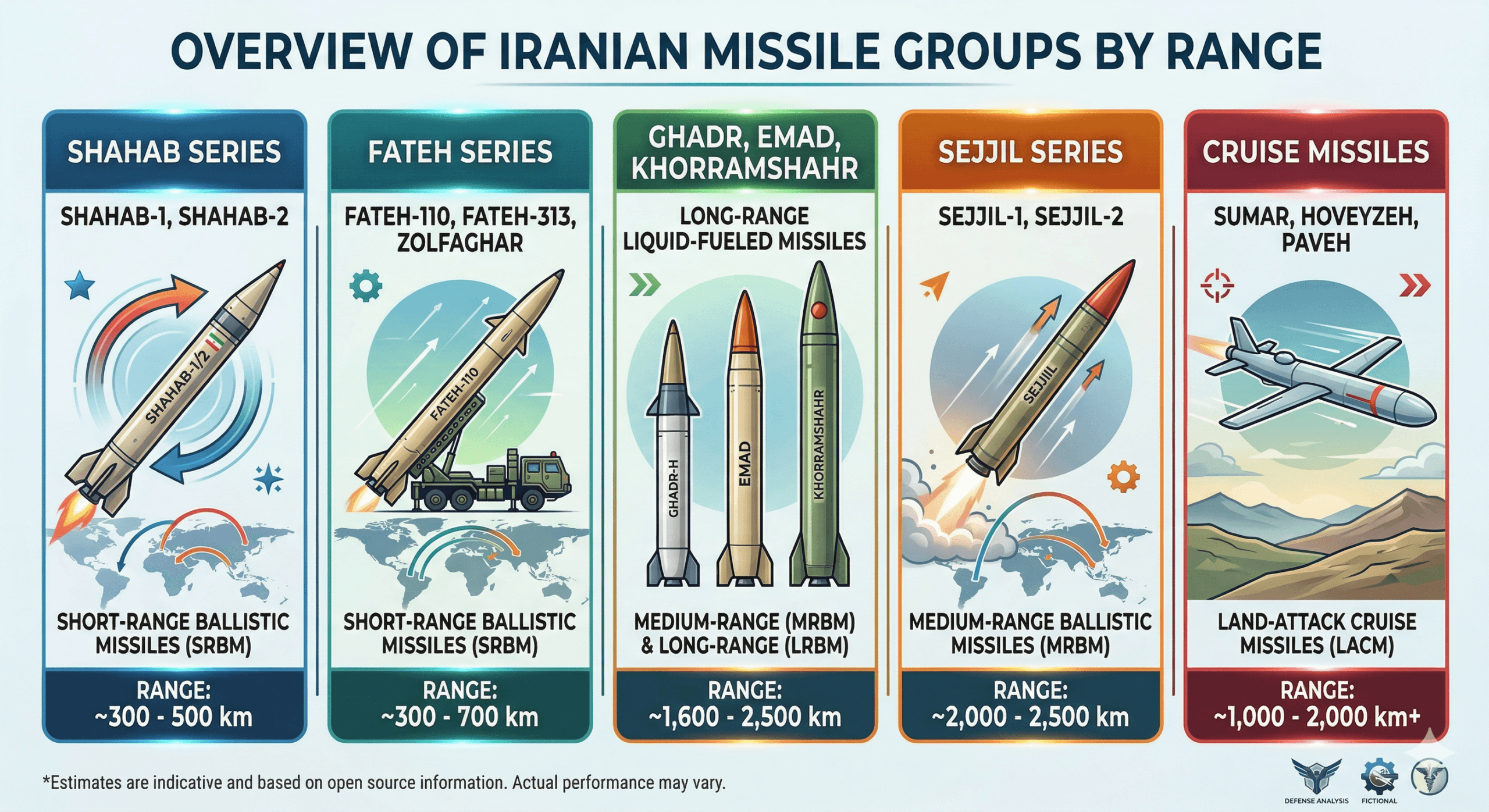
In the Iran–Israel confrontation, analysts pointed to several categories of missiles, based on range and purpose.
While exact models and numbers are debated, we can group them into three main classes.
Short‑Range Ballistic Missiles (SRBMs)
These missiles usually travel up to about 1,000 km.
In the Middle East, that range is enough to hit neighboring countries.
Common features of SRBMs:
Quick launch preparations.
Often used against military bases or cities in nearby states.
Cheaper and more widely produced compared to longer‑range missiles.
Medium‑Range Ballistic Missiles (MRBMs)
These can reach roughly 1,000–3,000 km.
In the context of ballistic missiles used in recent Iran US Israel war, MRBMs are crucial because they can cover the distance between Iran and Israel.
Typical uses of MRBMs:
Striking high‑value strategic targets.
Demonstrating the ability to hit distant enemies.
Acting as a powerful deterrent in regional conflicts.
Possible Iranian Missile Families
Open‑source reports and defense experts often mention types like:
Fateh family – short‑range, solid‑fuel missiles.
Zolfaghar / Dezful types – improved range and accuracy.
Shahab or Emad‑type MRBMs – based on older designs but still important.
Even if exact names differ in each strike, the pattern is clear: Iran Israel conflict ballistic missiles typically include a mix of short‑ and medium‑range weapons aimed at overwhelming defenses.
Accuracy and Guidance: How Precise Are These Missiles?
Modern ballistic missiles are much more accurate than older generations.
In the past, a missile might miss its target by kilometers. Today, some can land within tens of meters.
Features that improve accuracy in ballistic missiles used in recent Iran US Israel war include:
Inertial navigation systems (INS): Internal sensors that track movement.
Satellite guidance: Using global navigation signals where available.
Terminal guidance: Adjusting course in the final seconds using radar or optical sensors.
Why accuracy matters:
Fewer missiles are needed to hit each target.
A country can send a political message with more controlled damage.
Reduces the risk of unintended mass civilian casualties, though the danger still exists.
Warheads: What Do These Missiles Carry?
When people hear “ballistic missiles”, they often think of nuclear weapons.
However, in the recent Iran–Israel–US confrontation, the focus was on conventional warheads.
Typical payloads include:
High‑explosive (HE) warheads for destroying buildings, radars, or runways.
Submunitions (cluster‑type payloads) designed to damage wide areas like airfields.
Penetrating warheads for hardened or underground targets.
While Iran’s missile program is often discussed together with concerns about nuclear capability, the public and media focus in this conflict stayed on conventional ballistic missiles used in recent Iran US Israel war and how they were intercepted.
Iran’s Strategy: Why Use Ballistic Missiles?
Iran has invested heavily in its missile program for several reasons.
Unlike some countries, Iran has limited access to advanced air forces and modern fighter jets due to decades of sanctions.
Missiles offer several advantages:
They can reach far targets without risking pilots.
Iron Dome – mainly for short‑range rockets and some drones.
David’s Sling – for medium‑range threats.
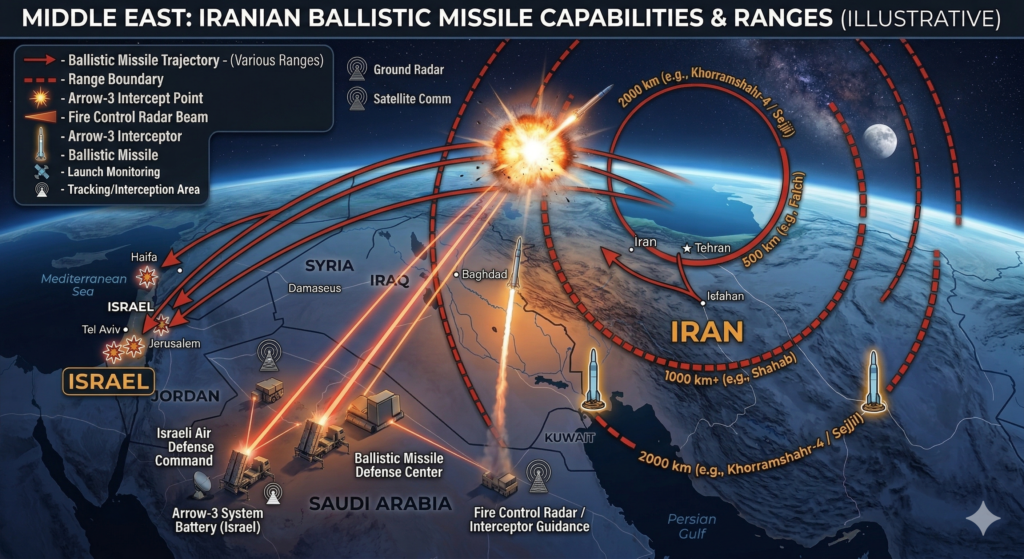
Arrow system (Arrow‑2, Arrow‑3) – designed to intercept ballistic missiles at high altitude and long range.
These systems work together with:
Powerful radars that can detect launches quickly.
Command centers that decide which interceptor to use.
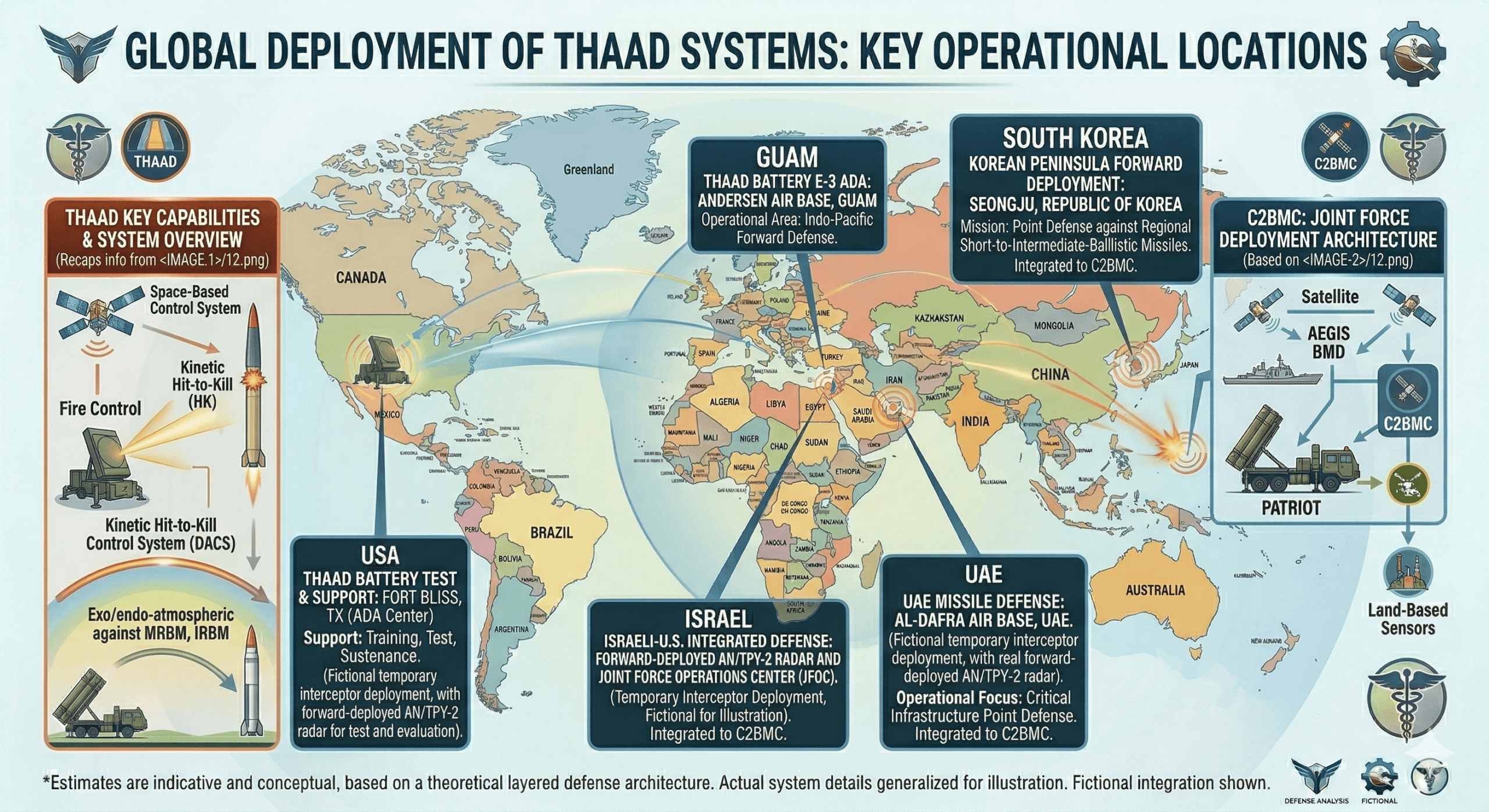
Support from allies like the United States, including advanced sensors and ships equipped with missile defense systems.
Despite this strong shield, no air‑defense system is perfect. That is why ballistic missiles used in recent Iran US Israel war still created serious fear and political pressure, even if many were intercepted.
Role of the United States
The US is a close military partner of Israel and plays a key role in regional security.
Early warning: Satellites and radars track missile launches.
Interception: US naval ships in the region can shoot down some missiles using onboard systems.
Political support: US statements and diplomacy influence how far each side goes.
This cooperation demonstrates how ballistic missile warfare today is not just between two countries. It often involves alliances, shared technology, and coordinated defense.
Real‑World Example: A Coordinated Missile Barrage
Imagine one night in the conflict:
Iran launches dozens or even hundreds of projectiles, including drones and ballistic missiles, towards Israeli airbases and critical infrastructure.
Radars in Israel, US bases, and allied systems quickly detect the launches and track each object.
In minutes:
Command centers decide which incoming objects are most dangerous.
Arrow and other systems fire interceptors to destroy ballistic missiles in the sky.
Pilots, civilians, and emergency services go on high alert.
Even if most of the ballistic missiles used in recent Iran US Israel war are intercepted, just one successful hit on a key facility can change the political and military balance.
Statistics and Facts: What Do Numbers Tell Us?
While exact figures differ between sources, some clear patterns stand out in modern missile attacks:
Missiles and drones are often launched in large swarms, sometimes over 100 in a single wave.
Interception rates can be very high, often reported above 80–90% in well‑defended scenarios.
Even a small number that slip through can cause serious damage or casualties.
These numbers show why both offensive missile capabilities and defensive systems are central to strategies in the Middle East. They also explain why the world followed ballistic missiles used in recent Iran US Israel warwith such intense attention.
How Ballistic Missiles Change Modern Warfare
Ballistic missiles are reshaping how countries plan wars and peace.
In the Iran–Israel–US context, several deeper trends are visible:
Deterrence through missiles: States use missile arsenals to discourage attacks by showing they can hit back.
Arms races: One side increases missile range and accuracy, the other side invests in better defenses.
Proxy vs direct conflict: Missiles allow a state to take direct action without sending troops across borders.
For smaller states or those under sanctions, missiles are seen as a “poor man’s air force” — a way to gain strategic power without expensive aircraft carriers or large fighter fleets.
Human Impact: Beyond Technology and Strategy
Behind the technical language, ballistic missiles used in recent Iran US Israel war affect real people.
When missiles are launched:
Civilians hear sirens and rush to shelters.
Families worry about loved ones in targeted areas.
Children grow up with regular drills and fear of sudden strikes.
Even when interception works, fragments and debris can fall on towns and villages. Psychological stress, economic disruption, and long‑term trauma are often ignored in military analysis but are very real for those living under the shadow of missile warfare.
Legal and Ethical Questions
The use of ballistic missiles raises important legal and moral issues.
Key questions include:
Are targets clearly military, or are civilian areas at risk?
Are attacks proportional to the goals claimed by the attacker?
How do international laws of war apply to high‑speed, long‑range strikes?
Because ballistic missiles used in recent Iran US Israel war can travel so far and so fast, mistakes or miscalculations can quickly lead to escalation. This is why many experts call for stronger regional agreements, communication channels, and transparency about missile tests.
Technology Race: Offense vs Defense
There is a constant race between missile designers and air‑defense engineers.
On the offensive side, countries try to:
Increase range.
Improve accuracy.
Add decoys and maneuvering warheads to confuse defenses.
On the defensive side, countries work to:
Detect launches earlier.
Track multiple targets at once.
Intercept warheads outside the atmosphere, before they approach cities.
The recent conflict highlighted that Iran Israel conflict ballistic missiles are now a central part of this race. Each test or real‑world exchange gives militaries valuable data to improve future systems.
Strong Conclusion: What the Missile Exchanges Really Mean
The story of ballistic missiles used in recent Iran US Israel war is not just about hardware, ranges, and interception percentages.
It is about how nations show power, manage fear, and try to control outcomes in a very dangerous region. Iran used ballistic missiles to prove it can reach Israel directly. Israel and the US responded by showing how effective their defenses and alliances can be.
Looking ahead:
Ballistic missiles will likely remain at the heart of Middle Eastern security.
Air‑defense systems will continue to improve, but never reach perfect protection.
Civilians will remain caught between offense and defense unless political solutions reduce the need for such weapons.
Understanding how these missiles work and why they were used helps you see past headlines and statistics. It reveals the deeper reality of modern conflict, where a single launch can shake not just one city, but the entire world conversation.
1. What are ballistic missiles used in recent Iran US Israel war?
They are long‑range rockets that follow a curved path through space before striking targets in the Iran–Israel conflict. In this context, they were used by Iran to hit or threaten strategic locations in Israel, with the US supporting Israel’s defenses.
2. Why did Iran use ballistic missiles instead of only drones?
Drones are useful for surveillance and smaller strikes, but ballistic missiles deliver heavier warheads at much higher speed. Using ballistic missiles used in recent Iran US Israel war allowed Iran to send a stronger political and military message.
3. How far can Iranian ballistic missiles reach?
Public sources suggest that some Iranian missiles can travel from a few hundred kilometers to over a thousand kilometers or more. This is enough to reach Israeli territory from parts of Iran, making Iran Israel conflict ballistic missiles a serious strategic concern
4. How does Israel defend against ballistic missiles?
Israel uses a layered system including Iron Dome, David’s Sling, and the Arrow interceptors. These systems work together to detect, track, and attempt to shoot down ballistic missiles used in recent Iran US Israel war before they hit their targets.
5. Did all ballistic missiles get intercepted?
No air‑defense system can guarantee 100% interception. While many ballistic missiles used in recent Iran US Israel war were reportedly intercepted, even a few that get through can cause damage or casualties.
6. Are nuclear warheads involved in this conflict?
Public discussion and official messaging around the recent Iran–Israel–US confrontation focused on conventional warheads, not nuclear ones. However, ballistic missiles are often linked with nuclear concerns, which is why their use in the region causes alarm.
7. What is the difference between ballistic and cruise missiles?
Ballistic missiles fly into space and fall back down along a ballistic path, while cruise missiles fly within the atmosphere and are powered throughout their journey. Both played roles in the broader conflict, but ballistic missiles used in recent Iran US Israel war attracted more attention due to their range and symbolic power.
8. How do ballistic missiles affect civilians?
Even when aimed at military targets, ballistic missiles put civilians at risk due to their explosive power and the possibility of missed targets or debris. Air‑raid sirens, shelter drills, and psychological stress are a daily reality when ballistic missiles used in recent Iran US Israel war are part of the battlefield.
9. Will ballistic missiles be used again in future Iran–Israel conflicts?
Many experts believe missiles will remain central to regional military strategies. As long as tensions stay high and technology advances, Iran Israel conflict ballistic missiles are likely to appear in future crises unless strong diplomatic solutions are found.
10. Why are these missiles important for global security debates?
Ballistic missiles link regional wars with global issues like nuclear non‑proliferation, arms control, and alliance politics. The use of ballistic missiles used in recent Iran US Israel war is watched closely by world powers, who worry about escalation and copycat behavior in other regions.