When you see news about missiles flying across the Middle East or Asia, the question people quietly ask is: how THAAD missile defense system works when everything is happening in seconds high above the earth. THAAD (Terminal High Altitude Area Defense) has become one of the most advanced missile shields in the world, relied on by the U.S., the UAE, Saudi Arabia, and other allies to stop incoming ballistic missiles before they hit cities or bases.
In this in‑depth guide, you will learn exactly how THAAD’s radar detects threats, how the fire‑control system decides to launch, how the interceptor flies and hits, and how THAAD fits into layered air and missile defense with systems like Patriot and Aegis. By the end, you will be able to explain how THAAD missile defense system works step‑by‑step in simple, accurate language.
How THAAD Missile Defense System Works: Big Picture
Step 1: Detecting a Ballistic Missile
Step 2: Tracking and Classifying the Threat
Step 3: Engagement Decision and Battle Management
Step 4: Interceptor Launch and Mid‑Course Guidance
Step 5: Terminal Guidance and Hit‑to‑Kill Impact
Real‑World Case Studies: THAAD in Combat
Why THAAD Matters in the Middle East and Asia
Strengths and Limitations of THAAD
Future Upgrades: Where THAAD Is Heading Next
FAQ: How THAAD Missile Defense System Works
Conclusion
What Is THAAD? Simple Definition
THAAD, short for Terminal High Altitude Area Defense, is a U.S. missile defense system designed to shoot down short‑, medium‑ and some intermediate‑range ballistic missiles during the terminal (final) phase of their flight. Unlike systems that use explosive warheads, THAAD interceptors rely on hit‑to‑kill technology, meaning they destroy the target by crashing into it at high speed, like “hitting a bullet with a bullet.”
To understand how THAAD missile defense system works, think of it as a very fast, very smart shield sitting between an incoming warhead and its target. It uses powerful radar to see far into the sky, computers to predict the missile’s path, and agile interceptors to collide with it before it can reach people on the ground.
Core Components: Hardware Behind THAAD
Before you break down how THAAD missile defense system works, you need to know the main building blocks that make it possible.
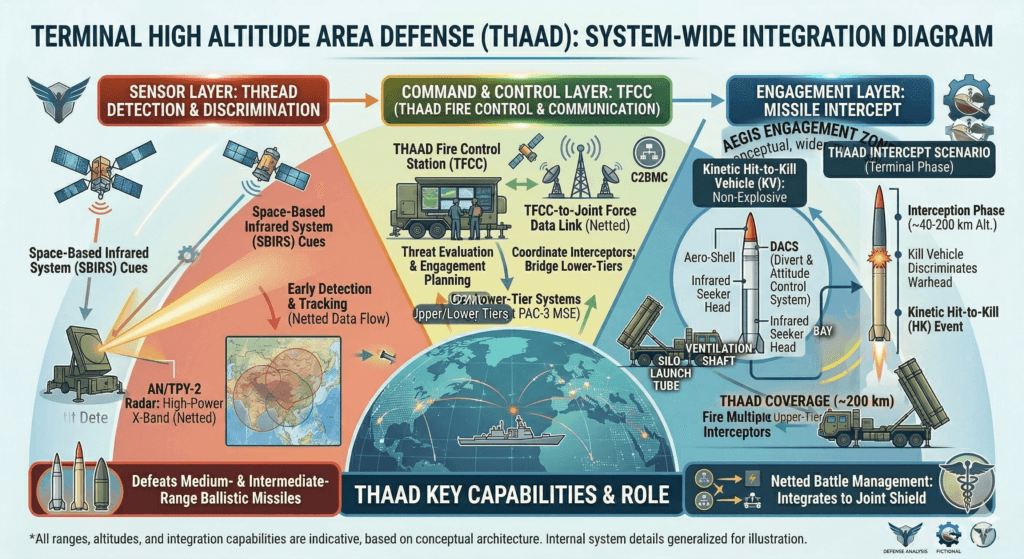
AN/TPY‑2 Radar
At the heart of THAAD is the AN/TPY‑2 radar, a powerful X‑band radar developed by Raytheon. It can operate in two modes:
Forward‑based mode: Placed near potential launch areas to detect missiles early and pass tracking data to other systems.
Terminal mode: Co‑located with THAAD batteries to track incoming missiles in the final stage and guide interceptors.
This radar is one reason how THAAD missile defense system works is so impressive—its ability to detect and track small warheads at long ranges and high altitudes gives defenders more time and better data to respond.
Launchers and Interceptor Missiles
THAAD uses truck‑mounted launchers, each carrying multiple interceptors in sealed canisters. These launchers are:
Road‑mobile, so they can be repositioned to protect different areas.
Designed for rapid reloading and firing.
The interceptors themselves are:
Two‑stage, solid‑fuel missiles capable of travelling at very high speeds.
Equipped with a kill vehicle that contains guidance systems, sensors, and steering thrusters to home in on the incoming warhead.
Without these agile interceptors, how THAAD missile defense system works in practice would be impossible, because ballistic warheads move at several kilometers per second in the terminal phase.
Fire Control and Communications
The third key piece in how THAAD missile defense system works is its fire‑control and communication center. This includes:
Battle management software that fuses radar data, predicts trajectories, and recommends engagement options.
Links to higher‑level command networks and other systems like Patriot, Aegis, and national early‑warning systems.
This is where human operators and automated algorithms work together to decide whether to fire, how many interceptors to use, and when to engage a threat.
How THAAD Missile Defense System Works: Big Picture
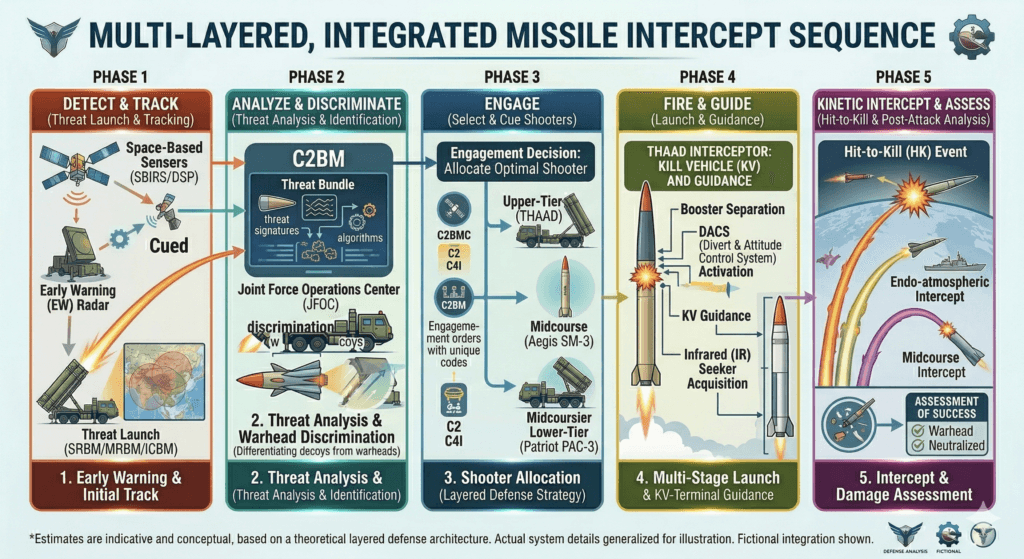
Now let’s walk step‑by‑step through how THAAD missile defense system works from the moment an enemy launches a missile to the final hit‑to‑kill impact.
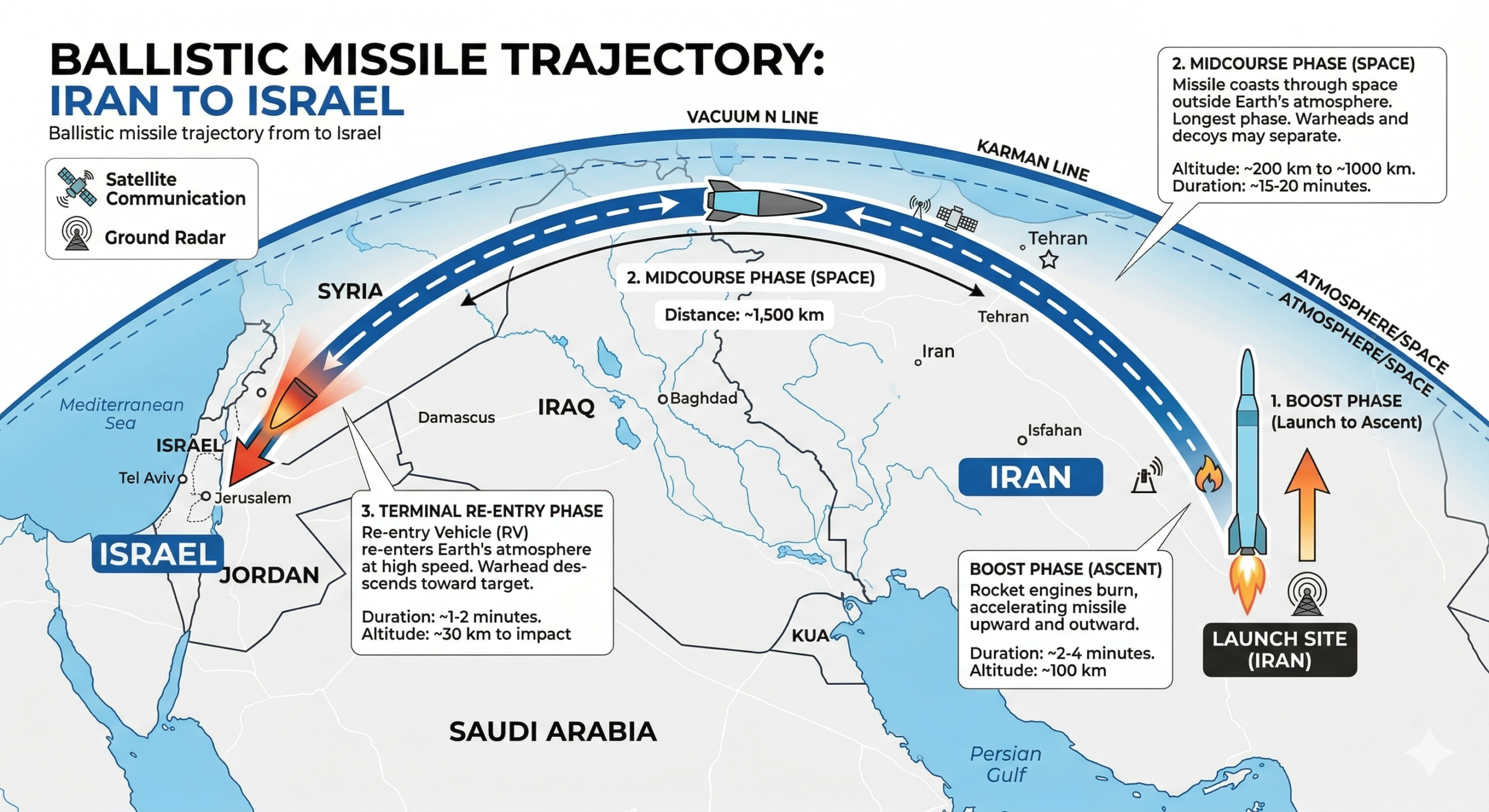
Every engagement begins with detection. Here is how THAAD starts its work:
An enemy launches a ballistic missile.
Early‑warning satellites and ground‑based radars detect the launch flash and initial trajectory.
The AN/TPY‑2 radar associated with THAAD picks up the target as it approaches the defended area.
This detection phase is crucial in how THAAD missile defense system works, because the earlier it detects the missile, the more time interceptors have to maneuver into position.
Step 2: Tracking and Classifying the Threat
After detection, the radar begins high‑precision tracking:
The AN/TPY‑2 radar continuously measures the missile’s position, speed, and direction.
The fire‑control computer uses this data to estimate the trajectory and likely impact point.
The system classifies the object—distinguishing between the real warhead, decoys, or pieces of the missile.
Distinguishing genuine warheads from debris is a key part of how THAAD missile defense system works at high altitudes, especially when advanced adversaries might deploy decoys to confuse defenses.
Step 3: Engagement Decision and Battle Management
Once the missile is tracked and classified, commanders must decide whether and how to engage:
The battle‑management software calculates engagement windows—time and space where an interceptor can successfully hit the target.
Operators review threat data: type of missile, predicted impact point, estimated damage if it hits.
If the missile threatens a defended area, the system recommends firing one or more THAAD interceptors, sometimes in coordination with Patriot or Aegis systems.
This engagement logic is a core part of how THAAD missile defense system works in real operations, because commanders must conserve interceptors while still guaranteeing protection.
Step 4: Interceptor Launch and Mid‑Course Guidance
Once the decision is made, a THAAD launcher fires an interceptor:
The missile leaves the canister and climbs steeply toward the predicted intercept point.
The interceptor uses inertial navigation and updates from the AN/TPY‑2 radar to stay on course.
Mid‑course corrections are transmitted via data‑links as radar continues to refine the warhead’s path.
This cooperative guidance is another essential part of how THAAD missile defense system works: the interceptor is not “fire and forget”—it constantly receives updated information so it can adjust to any changes in the target’s trajectory.
Step 5: Terminal Guidance and Hit‑to‑Kill Impact
As the warhead descends toward its target, the final phase begins:
The THAAD interceptor’s kill vehicle activates its on‑board seeker to pinpoint the warhead.
Small steering thrusters make rapid adjustments to line up a collision course.
The interceptor collides with the warhead at extremely high speed, destroying it through kinetic energy in a hit‑to‑kill impact.
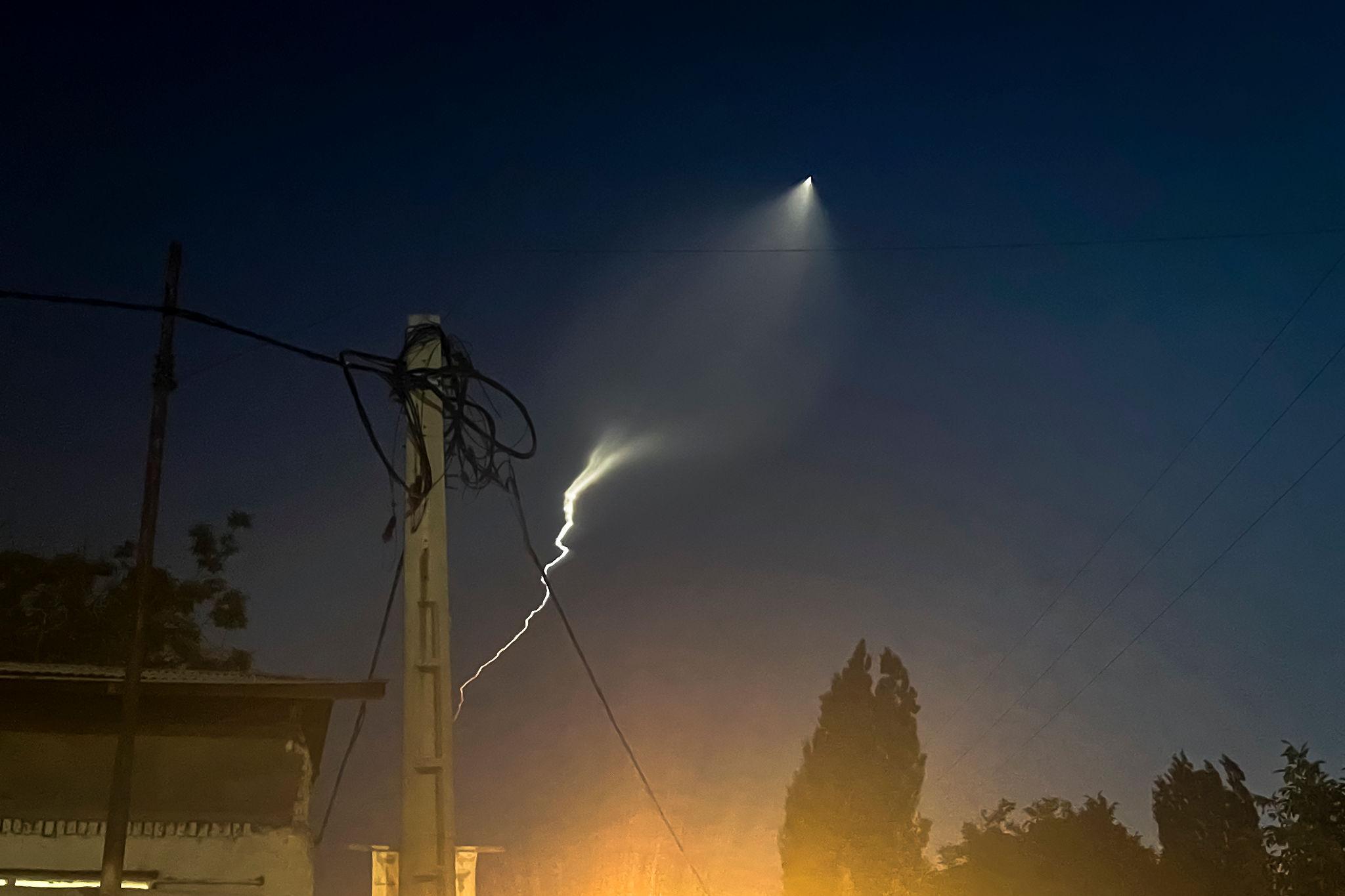
Eyewitness accounts from the UAE describe the resulting supersonic boom as the kill vehicle hits ballistic missiles more than 100 km above the country. This vivid example shows how THAAD missile defense system works in real life: by smashing incoming warheads far from their intended targets, often outside the atmosphere.
Because THAAD destroys the warhead by impact rather than exploding nearby, it reduces the risk of debris carrying unexploded material down onto the defended area.
Real‑World Case Studies: THAAD in Combat
Understanding how THAAD missile defense system works becomes easier when you look at real engagements, especially in the UAE and during recent tensions with Iran.
UAE’s first THAAD intercept (January 2022) In 2022, the UAE confirmed that its THAAD system had successfully intercepted a ballistic missile launched by Yemen’s Houthi rebels toward Abu Dhabi. Reports describe the missile being hit at high altitude, preventing significant damage on the ground. This was the first known operational THAAD intercept outside U.S. testing.
Ten years of THAAD in the UAE In 2025, Lockheed Martin marked ten years of THAAD deployment in the UAE, highlighting the system’s role as a core part of the country’s missile defense and its integration with Patriot batteries. This long‑term partnership shows how THAAD missile defense system works not just technically, but also politically and strategically.
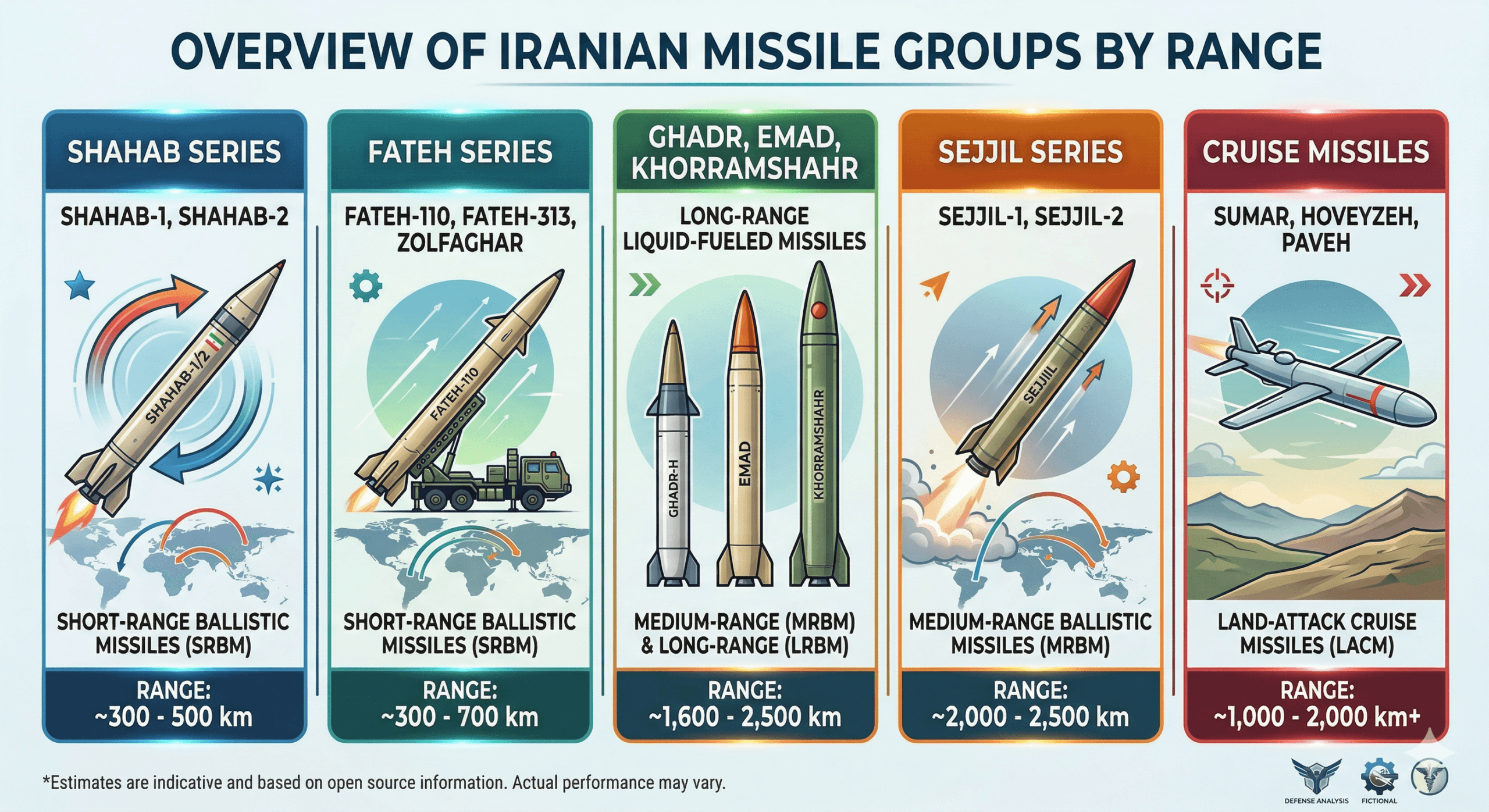
THAAD and the 2026 Iran conflict During the 2026 Iran–Israel–Gulf war, analysts reported THAAD intercepts against Iranian ballistic missiles aimed at Gulf cities and energy facilities, while Iran also targeted radars linked to THAAD batteries in Jordan, Saudi Arabia, and the UAE. These events illustrate both the strengths and vulnerabilities in how THAAD missile defense system works in a high‑intensity regional war.
Why THAAD Matters in the Middle East and Asia
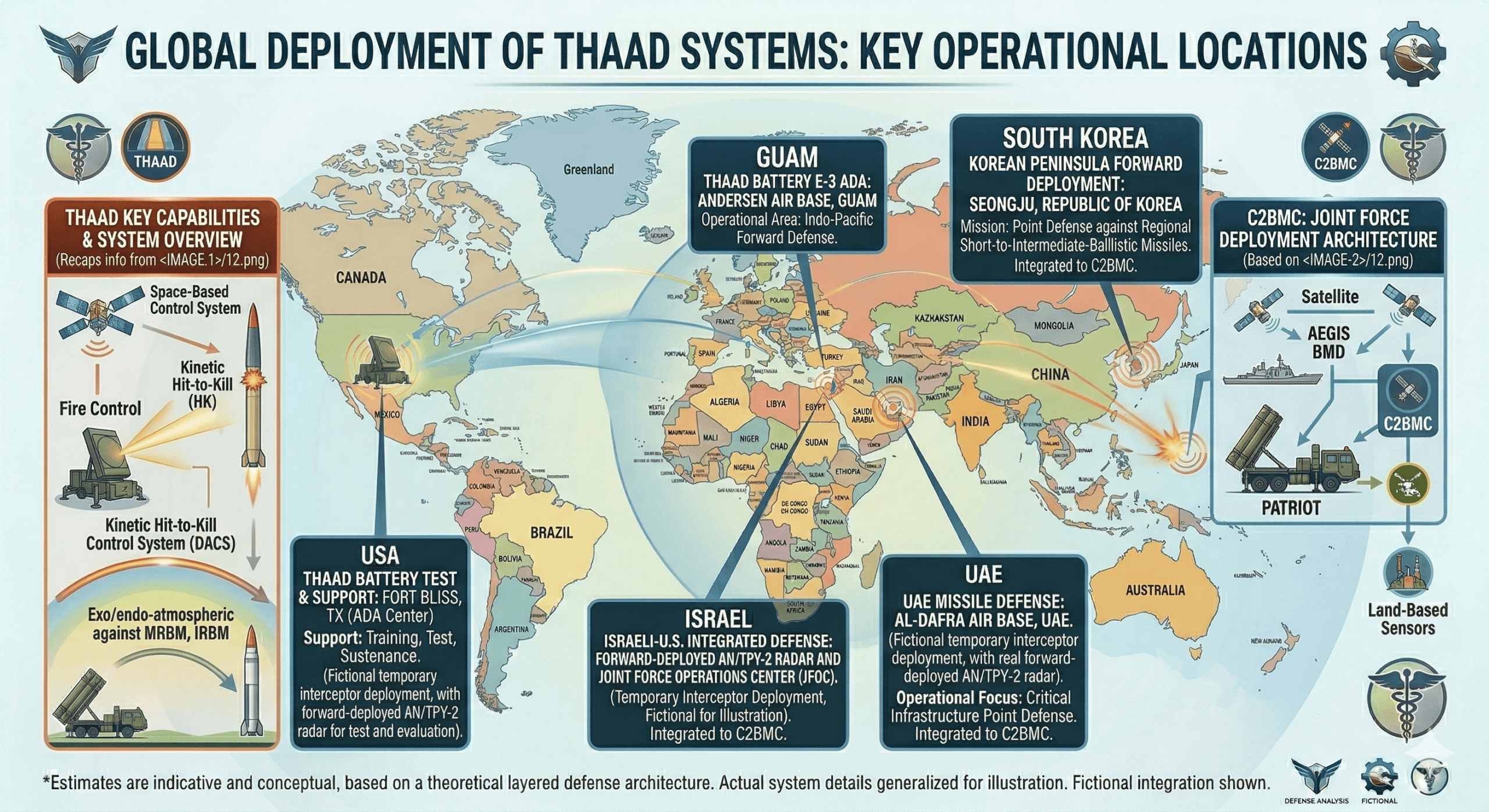
THAAD is deployed in several strategic locations: the UAE, Saudi Arabia, South Korea, Guam, and occasionally Israel, all places where ballistic missile threats from regional adversaries are serious.
There are three main reasons how THAAD missile defense system works has become so important in these regions:
High‑altitude coverage THAAD can intercept missiles at altitudes of roughly 40–150 km, sometimes even higher, giving defenders a bigger “bubble” of protection than lower‑tier systems.
Layered defense with Patriot and Aegis In the Middle East, THAAD often sits above Patriot, creating a two‑tier shield: THAAD for high‑altitude intercepts, Patriot for lower‑altitude threats closer to the ground. In Asia, THAAD’s radar and interceptors complement Aegis Ballistic Missile Defense on U.S. and Japanese ships.
Deterrence against regional adversaries Knowing how THAAD missile defense system works—and that it can hit missiles outside the atmosphere—forces adversaries like Iran and North Korea to invest in more complex missiles, decoys, or saturation tactics, raising their cost and risk.
Strengths and Limitations of THAAD
No explanation of how THAAD missile defense system works is complete without an honest look at what it does well and where it struggles.
Strengths
Hit‑to‑kill precision THAAD’s kinetic intercepts avoid large explosive warheads, reducing collateral damage and making it safer to use over friendly territory.
High‑altitude intercept window By engaging targets high above the earth, THAAD can destroy warheads before fragmentation spreads over a wide area, and in some cases provide another chance for lower‑tier systems if the first shot fails.
Proven in tests and combat U.S. Missile Defense Agency reports show a high success rate in flight tests, and real‑world intercepts in the UAE confirm how THAAD missile defense system works under live‑fire conditions.
Integration with other systems THAAD’s AN/TPY‑2 radar and communication links allow it to share data with Aegis ships, Patriot batteries, and other national networks, strengthening overall defense.
Limitations
Cost and logistics THAAD interceptors and radars are expensive and complex, making it difficult to deploy large numbers everywhere. If wars drag on, countries may worry about running low on interceptors, just as Gulf states are already concerned about their stocks of Patriot and other missiles.
Radars as high‑value targets The AN/TPY‑2 radar is essential for how THAAD missile defense system works—but that also makes it a prime target. Iranian strikes on radar bases linked to THAAD in Jordan, Saudi Arabia, and the UAE show how adversaries aim to blind missile defense networks first.
Limited scope (ballistic missiles only) THAAD is optimized for ballistic missiles, not for low‑flying cruise missiles or swarming drones. Those threats must be handled by other systems, such as Patriot, NASAMS, or Iron Dome‑type solutions.
Political controversy Deployments in countries like South Korea triggered diplomatic tension with China and Russia, which worry about how THAAD’s radar affects their strategic deterrents. This political risk is part of the broader story of how THAAD missile defense system works in international relations.
Future Upgrades: Where THAAD Is Heading Next
Missile defense is a constant race between offense and defense. To keep up, developers and operators are exploring ways to enhance how THAAD missile defense system works over the next decade.
Likely trends include:
Better integration with regional networks In the Middle East, there is a push for more shared situational awareness between Israel, Gulf states, and the U.S., so that THAAD, Patriot, Aegis, and local systems all see the same picture.
Software and seeker upgrades As adversaries develop more complex ballistic missiles, THAAD’s guidance software and seekers may be updated to better distinguish warheads from decoys and handle maneuvering targets.
Hardening and redundancy After strikes on THAAD‑linked radars, there is growing interest in hardened shelters, distributed radars, and backup communications to keep how THAAD missile defense system works resilient even under attack.
Links to new technologies In the future, THAAD may operate alongside lower‑cost laser defenses, improved short‑range systems, and AI‑enhanced command software to optimize when and how often it fires interceptors.
Conclusion
You have now seen how THAAD missile defense system works from the inside out: powerful AN/TPY‑2 radar, agile hit‑to‑kill interceptors, smart battle‑management software, and tight integration with other defenses. In an era of rising missile threats from Iran, North Korea, and other actors, THAAD has become a central pillar in the layered protection of the Middle East, Asia, and key U.S. positions oversea
1. What is THAAD and what does it defend against?
THAAD is a U.S. Terminal High Altitude Area Defense system designed to intercept short‑, medium‑ and some intermediate‑range ballistic missiles in their terminal phase. Understanding how THAAD missile defense system works is key to seeing how it protects cities, bases, and critical infrastructure from these high‑speed threats.
2. How THAAD missile defense system works in simple terms?
Simply put, how THAAD missile defense system works is: radar detects and tracks an incoming ballistic missile, computers calculate its path, commanders decide to engage, a THAAD interceptor launches, receives guidance updates, and then collides with the warhead at high speed to destroy it before impact.
3. What role does the AN/TPY‑2 radar play?
The AN/TPY‑2 radar is central to how THAAD missile defense system works because it detects, tracks, and classifies incoming missiles with high precision. It provides the data needed to predict trajectories and guide interceptors accurately, and can also share information with other systems like Patriot and Aegis
4. Where has THAAD been used in real combat?
The UAE has publicly confirmed THAAD intercepts against Houthi ballistic missiles, and THAAD has been highlighted in recent conflicts involving Iranian missile attacks on Gulf states and Israel. These real‑world events show how THAAD missile defense system works outside test ranges, under genuine combat conditions
5. Does THAAD protect against cruise missiles and drones?
THAAD is optimized for high‑altitude ballistic missiles, not low‑flying cruise missiles or small drones. Those other threats are usually handled by systems like Patriot, NASAMS, or Iron Dome, which is why layered defense is essential even when you know how THAAD missile defense system works.
6. Why do radars linked to THAAD get targeted?
Because the radar is crucial to how THAAD missile defense system works, adversaries like Iran see THAAD‑linked radar bases as high‑priority targets. Disabling or degrading these radars can blind the system and make it harder to intercept incoming missiles.
7. Is THAAD part of a bigger missile defense network?
Yes. In places like the Middle East and Asia, THAAD operates as part of a wider network that includes Patriot, Aegis ships, early‑warning satellites, and local air defenses. This integration is a major reason how THAAD missile defense system works so effectively in real crises.