
Artificial Intelligence (AI) is rapidly transforming the way students learn, study, and solve problems. What once seemed like science fiction is now part of everyday education. From personalized tutoring to instant homework assistance, AI tools are making learning faster, smarter, and more engaging.
Today, students no longer rely only on textbooks and classroom lectures. With AI-powered tools, they can access explanations, practice exercises, and interactive learning experiences anytime and anywhere. This technology is helping students understand difficult subjects, improve productivity, and develop important skills for the future.
In this article, we will explore how AI helps students, how it works, its real‑world uses, and the impact it will have on education in the coming years.

What is AI in Education?
Artificial Intelligence (AI) refers to computer systems that can perform tasks that normally require human intelligence. These tasks include learning, problem‑solving, recognizing patterns, and making decisions.
In education, AI is used to create smart learning tools that help students study more effectively.
Key Features of AI in Education
AI systems can:
Analyze student learning patterns
Provide personalized study materials
Answer questions instantly
Automate grading and feedback
Recommend learning resources
These capabilities allow students to receive support that feels similar to having a personal tutor.
Simple Example
Imagine a student struggling with mathematics. An AI learning platform can:
Identify the topics the student finds difficult
Provide easier explanations
Give additional practice questions
Track improvement over time
This personalized approach makes learning more efficient and less stressful.
How AI Works for Students
AI tools use several technologies such as machine learning, natural language processing, and data analysis to understand student needs and provide support.
Let’s look at how this process works.
- Data Collection
AI systems first collect information about how students learn. This may include:
Quiz scores
Time spent on lessons
Questions asked
Mistakes made in exercises
This data helps AI understand a student’s strengths and weaknesses.
- Learning Pattern Analysis
Using machine learning algorithms, AI analyzes the collected data to detect patterns in learning behavior.
For example, the system might notice that a student:
Understands visual explanations better
Struggles with algebra problems
Learns faster through practice questions
Based on this analysis, the AI adjusts the learning content.
- Personalized Recommendations
After analyzing the student’s learning style, AI provides customized recommendations such as:
Extra practice exercises
Video tutorials
Simplified explanations
Interactive quizzes
This personalized learning path helps students progress more efficiently.
Real‑World Uses of AI for Students
AI is already being used in many ways to support students around the world. These tools help improve learning, increase productivity, and reduce academic stress.
- AI Homework Assistance
AI-powered tools can help students understand difficult topics while doing homework.
Students can:
Ask questions
Get step-by-step explanations
Receive instant feedback
This allows students to learn independently even when teachers are not available.
- Personalized Learning Platforms
AI-based learning platforms adapt lessons according to each student’s performance.
Benefits include:
Customized study plans
Adaptive difficulty levels
Continuous progress tracking
This approach ensures that students learn at their own pace.
- Language Learning
AI helps students learn new languages more effectively.
Features often include:
Speech recognition for pronunciation
Real-time grammar correction
Interactive conversation practice
These tools make language learning more interactive and practical.
- Smart Study Assistants
AI study assistants can help students organize their academic tasks.
They can:
Create study schedules
Set reminders for assignments
Summarize long notes
Generate practice quizzes
This improves time management and productivity.
- AI-Based Writing Support
AI writing tools help students improve their writing skills.
They assist with:
Grammar correction
Sentence improvement
Vocabulary suggestions
Essay structure guidance
Students can learn better writing techniques while completing assignments.
Real‑World Examples of AI Helping Students
Many educational institutions and students already benefit from AI-powered tools.
Example 1: AI Tutoring Systems
Some online tutoring systems use AI to provide personalized teaching. These systems analyze student answers and explain mistakes immediately.
Result:
Students receive instant guidance instead of waiting for teacher feedback.
Example 2: Smart Learning Apps
Many learning apps use AI to adapt lessons based on performance.
For example:
If a student answers correctly, the difficulty increases.
If a student struggles, the app provides easier explanations.
This adaptive learning improves understanding and confidence.
Example 3: AI for Exam Preparation
AI platforms help students prepare for exams by generating:
Practice tests
Mock exams
Performance reports
Students can identify weak areas and focus on improving them before exams.
Benefits of AI for Students
AI offers many advantages that improve the learning experience.
- Personalized Learning
Every student learns differently. AI adjusts content based on individual learning speed and style.
- 24/7 Learning Support
Students can get help anytime, even late at night while studying.
- Faster Feedback
Instead of waiting days for results, AI can provide instant feedback on assignments and quizzes.
- Improved Engagement
Interactive AI tools make learning more interesting through quizzes, simulations, and gamified lessons.
- Better Time Management
AI study assistants help students plan schedules and prioritize tasks effectively.
Challenges of AI in Education
Although AI offers many benefits, there are also some challenges.
- Over‑Reliance on Technology
Students may become too dependent on AI tools instead of developing independent thinking skills.
- Data Privacy Concerns
AI systems collect student data, which must be handled carefully to protect privacy.
- Limited Human Interaction
Education is not only about information. Teacher guidance and human interaction remain important for emotional support and motivation.
The Future Impact of AI on Education
AI is expected to play an even bigger role in education in the future.
Possible Developments
In the coming years, we may see:
Fully personalized digital classrooms
AI tutors available for every student
Virtual reality learning powered by AI
Automated grading systems for teachers
AI as a Learning Partner
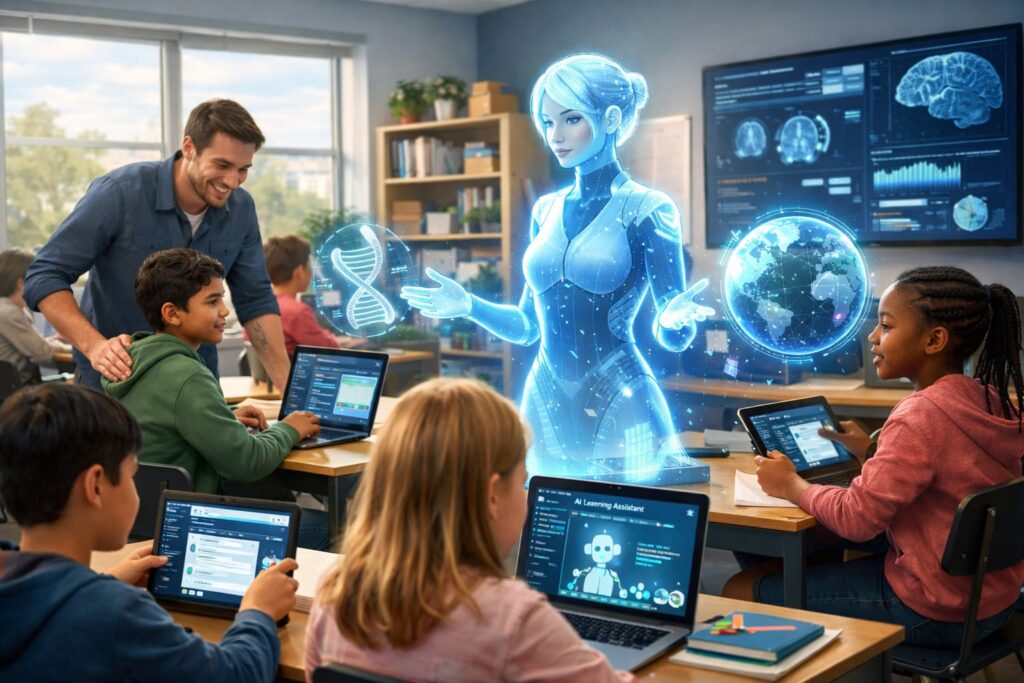
Instead of replacing teachers, AI will likely work alongside them.
Teachers will focus more on:
Mentoring students
Developing creativity
Encouraging critical thinking
Meanwhile, AI will handle repetitive tasks and provide personalized academic support.
How Students Can Use AI Wisely
To get the best results from AI tools, students should use them responsibly.
Smart Ways to Use AI
Use AI to understand concepts, not just get answers
Practice solving problems independently
Verify information from multiple sources
Focus on learning, not shortcuts
When used correctly, AI becomes a powerful learning assistant rather than a replacement for effort.
Conclusion
Artificial Intelligence is revolutionizing education by making learning more personalized, accessible, and efficient. Students now have access to intelligent tools that can explain difficult topics, provide instant feedback, and help manage study schedules.
From AI tutoring systems to smart study assistants, technology is empowering students to learn at their own pace and achieve better academic results. However, it is important to use AI responsibly and combine it with critical thinking and independent learning.
In the future, AI will continue to reshape education by supporting both students and teachers. Instead of replacing traditional learning, it will enhance it, creating smarter classrooms and better learning experiences for students around the world.
By embracing AI as a learning partner, students can unlock new opportunities and prepare themselves for a technology-driven future. 🚀
1 thought on “How AI Can Help Students: A Complete Guide to Smarter Learning”