When a star exhausts its nuclear fuel, it doesn’t simply go dark. Depending on its initial mass, it collapses into one of several exotic remnants — and two of the most common are white dwarfs and neutron stars. These objects are not merely “dead stars”; they are laboratories of extreme physics that no experiment on Earth can replicate. A neutron stars vs white dwarfs comparison reveals two profoundly different endpoints shaped by the same fundamental force: gravity.
Understanding what separates these two classes of stellar corpse matters not just for theoretical astrophysics, but for interpreting gravitational wave signals, Type Ia supernova cosmology, and the origin of heavy elements in the universe. This article walks through their formation, internal structure, observable properties, and ultimate fates — with honest attention to what we know firmly, what remains contested, and what is still genuinely unknown.
Formation: How Each Object Is Born
White Dwarfs: The Quiet Exit of Sun-Like Stars
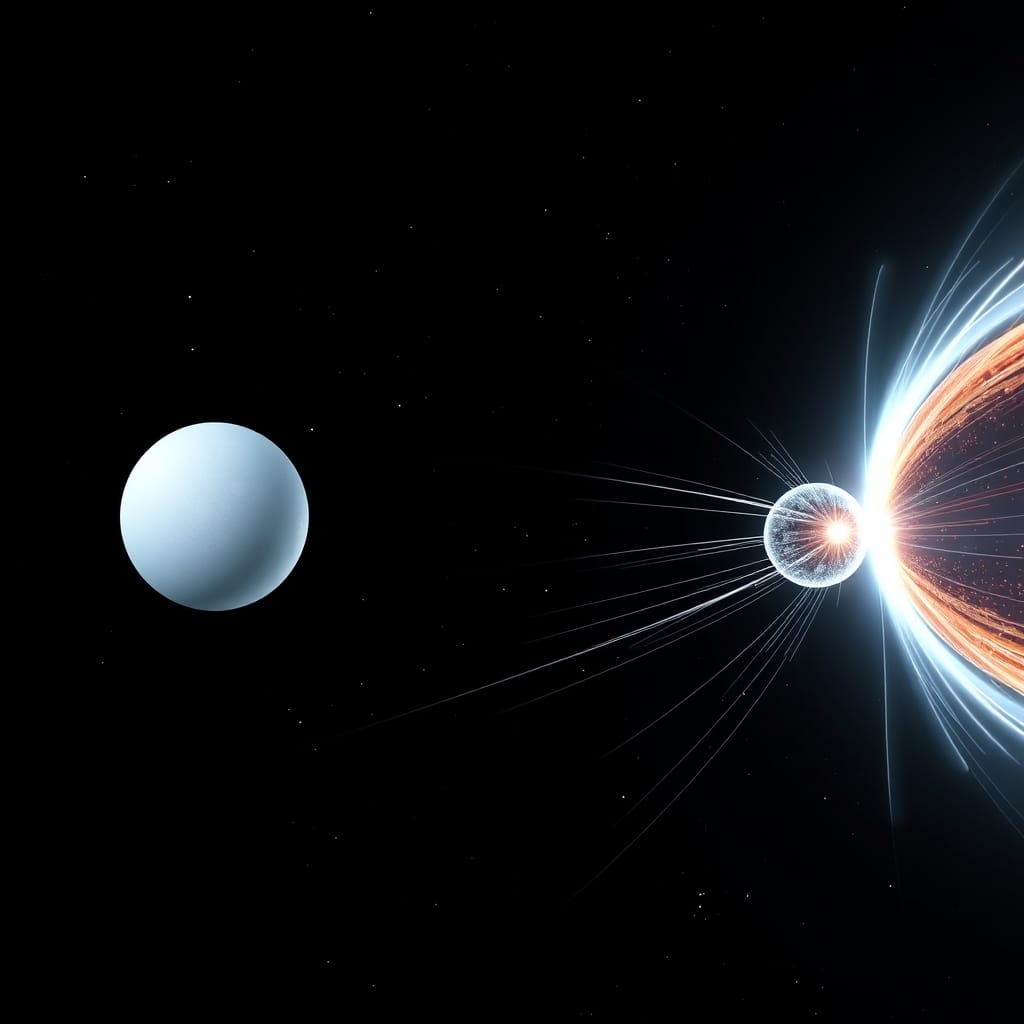
Stars with initial masses below roughly 8 solar masses — which includes the vast majority of stars, including our Sun — end their lives without a supernova explosion. After exhausting hydrogen in their cores, they expand into red giants, fusing helium into carbon and oxygen. Eventually, the outer layers are expelled as a planetary nebula, leaving behind the inert, electron-degenerate core: a white dwarf.
White dwarfs are composed primarily of carbon and oxygen (for most cases), though some lower-mass progenitors leave helium-core white dwarfs, and some higher-mass progenitors near the 8-solar-mass boundary may produce oxygen-neon white dwarfs. The key physics is electron degeneracy pressure — a quantum mechanical effect in which electrons resist compression not because of thermal pressure, but because the Pauli exclusion principle forbids two electrons from occupying the same quantum state. This pressure is what holds a white dwarf up against gravity indefinitely, independent of temperature.
Neutron Stars: Born in Catastrophe
Stars with initial masses between roughly 8 and 20–25 solar masses (the upper boundary is uncertain) undergo core-collapse supernovae. When the iron core — which cannot release energy through further fusion — exceeds about 1.4 solar masses (the Chandrasekhar limit), electron degeneracy pressure fails. The core collapses in under a second, reaching nuclear densities. Protons and electrons are crushed together to form neutrons via inverse beta decay, and the resulting neutron degeneracy pressure (supplemented by the repulsive core of the strong nuclear force) halts the collapse, leaving a neutron star.
The outer layers of the star rebound off this stiff core and are expelled in a supernova explosion visible across galaxies. The neutron star is left behind, often spinning rapidly and carrying a powerful magnetic field — conditions that produce pulsars, the precise cosmic clocks that enabled some of the most stringent tests of general relativity.
Size and Mass: Extremes at Opposite Ends
The contrast in physical scale between these two objects is striking, even though both are stellar remnants.
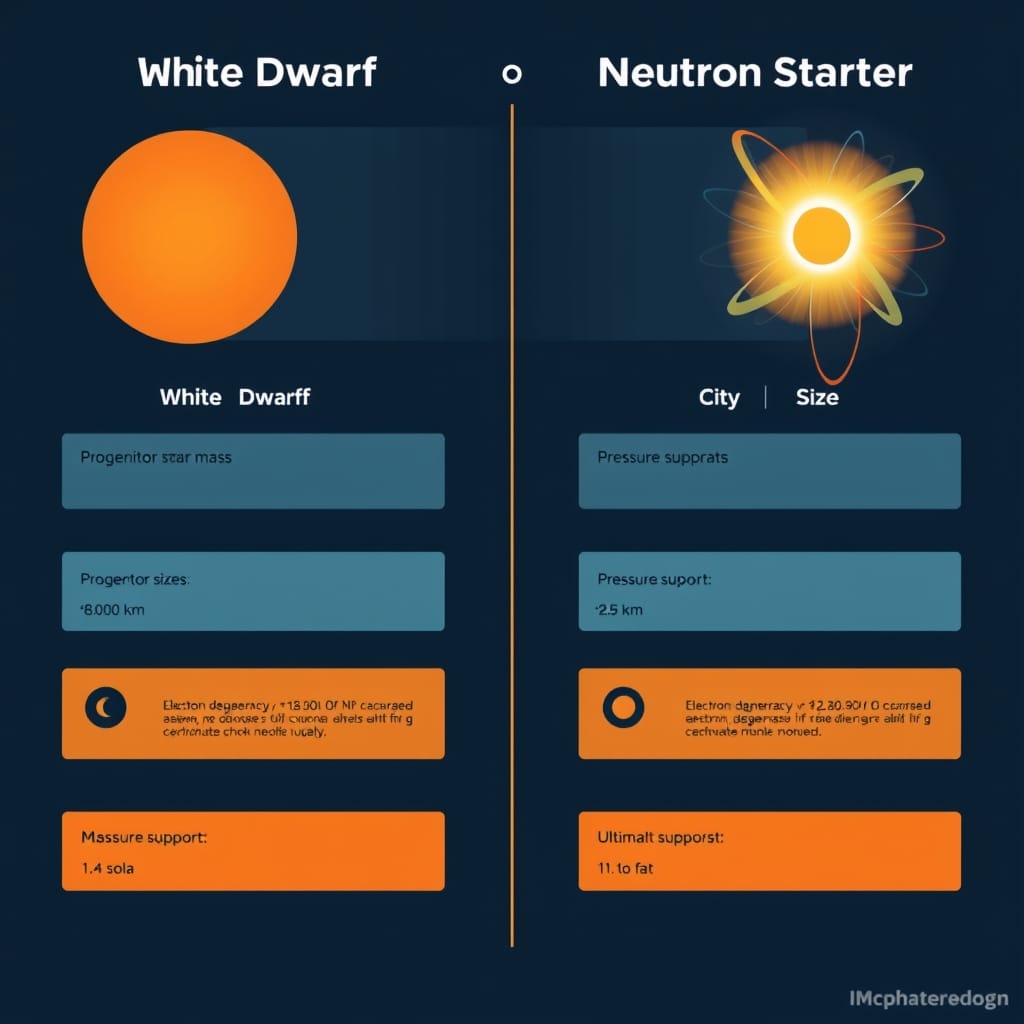
| Property | White Dwarf | Neutron Star |
|---|---|---|
| Typical mass | 0.5–1.4 M☉ | 1.2–2.1 M☉ |
| Typical radius | ~7,000–10,000 km (Earth-sized) | ~10–13 km (city-sized) |
| Average density | ~10⁶ g/cm³ (1 tonne per cm³) | ~10¹⁴–10¹⁵ g/cm³ (nuclear density) |
| Surface gravity | ~10⁵ × Earth’s | ~10¹¹–10¹² × Earth’s |
| Escape velocity | ~5,000–10,000 km/s (~2–3% c) | ~100,000–150,000 km/s (~40–50% c) |
A white dwarf is roughly the size of Earth but may contain half the Sun’s mass. A neutron star packs more than a solar mass into a sphere about 20–26 km across — comparable to a mid-sized city. One cubic centimeter of neutron star material would weigh approximately 400 million tonnes on Earth. These numbers are not approximations for effect; they follow directly from the physics of nuclear-density matter.
Internal Structure: What Lies Beneath the Surface
Inside a White Dwarf
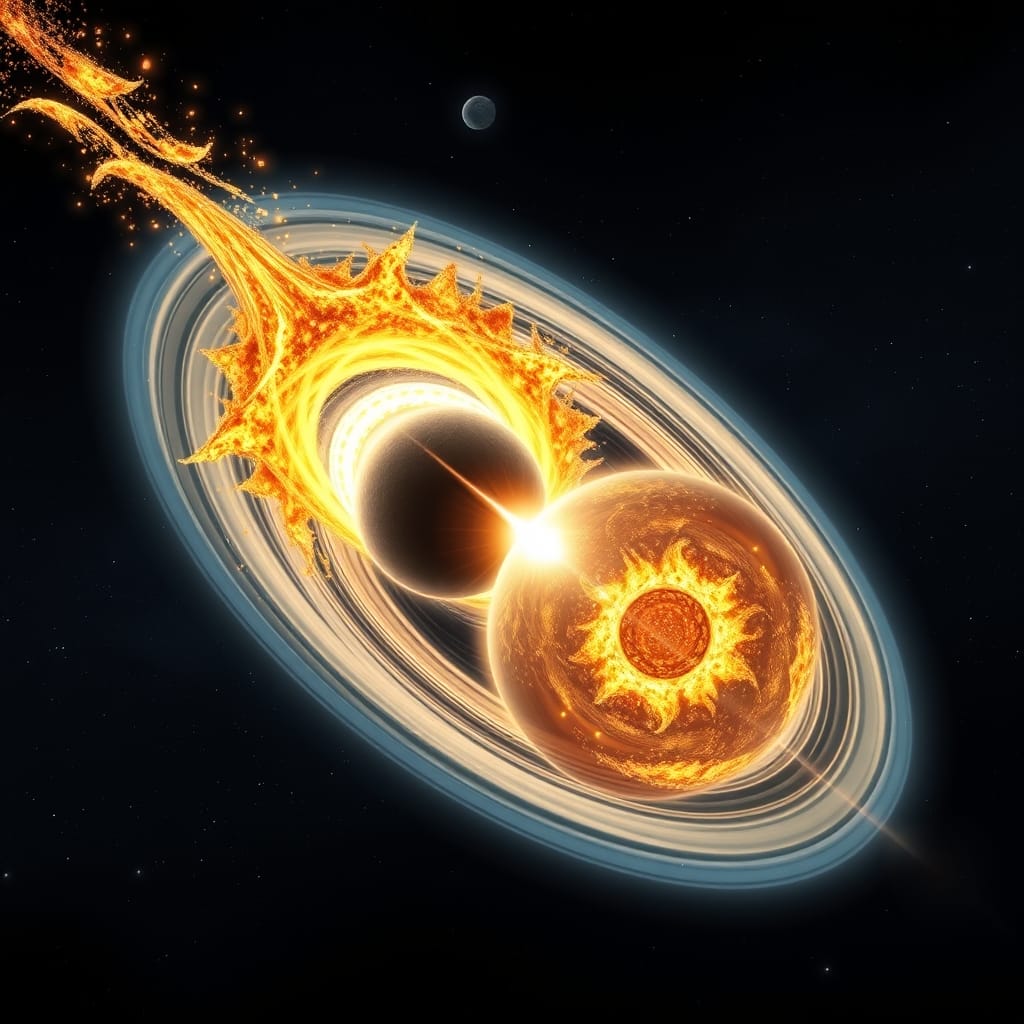
White dwarfs are relatively well-understood internally. The bulk of the star is a crystalline or liquid lattice of carbon and oxygen ions bathed in a sea of degenerate electrons. As a white dwarf cools over billions of years, the ions can settle into a crystalline lattice — a process called crystallization. Observations from the Gaia satellite have confirmed this process through characteristic signatures in white dwarf luminosity functions, providing direct observational evidence for a theoretical prediction made decades ago.
The outer layers are stratified: a thin hydrogen atmosphere (in DA-type white dwarfs, the most common) overlies a helium layer, which overlies the carbon-oxygen core. This layering occurs because of gravitational settling — heavier elements sink, lighter ones float. The atmosphere is typically only a few hundred meters thick.
Inside a Neutron Star
Neutron star interiors are far less understood and represent one of the most active frontiers in nuclear physics. The outer crust is a lattice of neutron-rich nuclei with free electrons — somewhat analogous to a white dwarf but far denser. Deeper in, the inner crust contains free neutrons that may form a superfluid. The outer core is thought to consist of a neutron superfluid with proton superconductor properties. The inner core — if it exists as a distinct region — is genuinely unknown: candidates include hyperons (strange baryons), pion or kaon condensates, or quark-gluon plasma (free quarks and gluons not bound into hadrons).
The 2017 detection of gravitational waves from a neutron star merger (GW170817) by LIGO and Virgo, combined with electromagnetic follow-up, placed constraints on the neutron star equation of state — essentially, how pressure relates to density at supranuclear conditions. These measurements disfavor both very soft and very stiff equations of state, but the inner core composition remains unresolved. This is not a minor gap; it touches on fundamental questions in quantum chromodynamics.
Magnetic Fields, Rotation, and Observable Behavior
Both types of remnant can carry strong magnetic fields, but the scales differ enormously.
White dwarfs have surface magnetic fields ranging from essentially zero to about 10⁹ Gauss in the most strongly magnetized examples (called magnetic white dwarfs). Typical fields are far weaker. Rotation periods range from minutes to days; the fastest-spinning known white dwarfs rotate in about 70 seconds.
Neutron stars are in a different category entirely. Ordinary pulsars have fields of roughly 10¹² Gauss and spin periods from milliseconds to seconds. Magnetars — a subclass of neutron stars — carry fields up to 10¹⁵ Gauss, the strongest known magnetic fields in the universe. These fields are so intense that they distort the electron clouds of atoms and can crack the neutron star crust, producing X-ray and gamma-ray flares detectable across the galaxy. Millisecond pulsars, by contrast, have been spun up by accreting matter from a binary companion and rotate hundreds of times per second with extraordinary regularity — accurate enough to serve as natural clocks for detecting gravitational wave backgrounds.
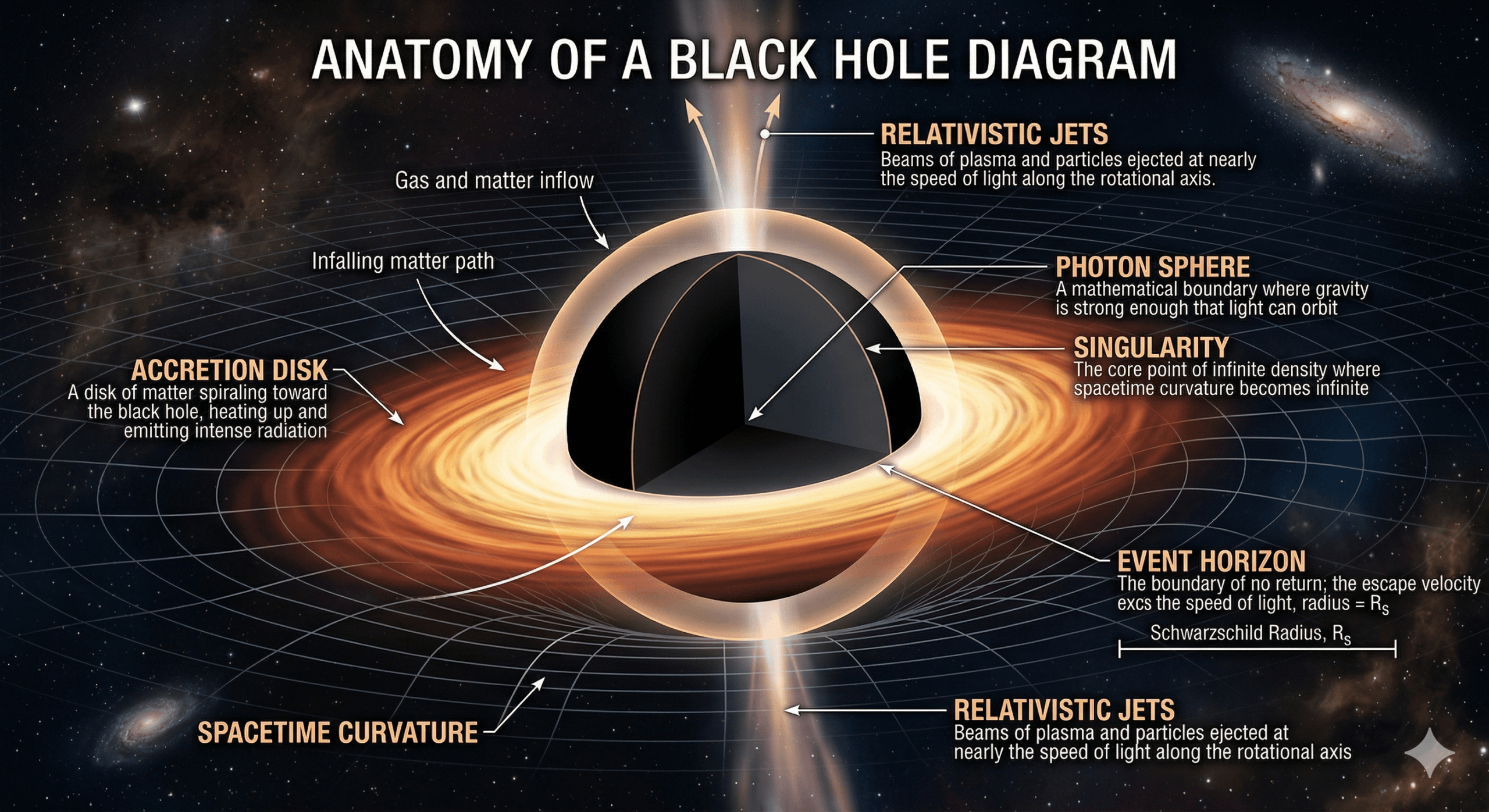
For more on the exotic physics near compact objects, see our explainer on what an event horizon is and how it forms, which provides useful context for understanding the boundary conditions near the densest stellar remnants.
Mass Limits and What Happens When They Are Exceeded
The Chandrasekhar Limit for White Dwarfs
Subrahmanyan Chandrasekhar showed in 1930 that electron degeneracy pressure has a maximum: it cannot support a white dwarf above approximately 1.4 solar masses. If a white dwarf in a binary system accretes enough matter from a companion to approach this limit, one of two things may happen: it explodes as a Type Ia supernova (leaving no remnant), or — in some scenarios — it collapses into a neutron star. Type Ia supernovae are used as cosmological distance indicators because their peak luminosities are relatively standardized, making them central to the discovery of dark energy. The exact ignition mechanism (single-degenerate vs. double-degenerate progenitors) remains debated.
The Tolman–Oppenheimer–Volkoff Limit for Neutron Stars
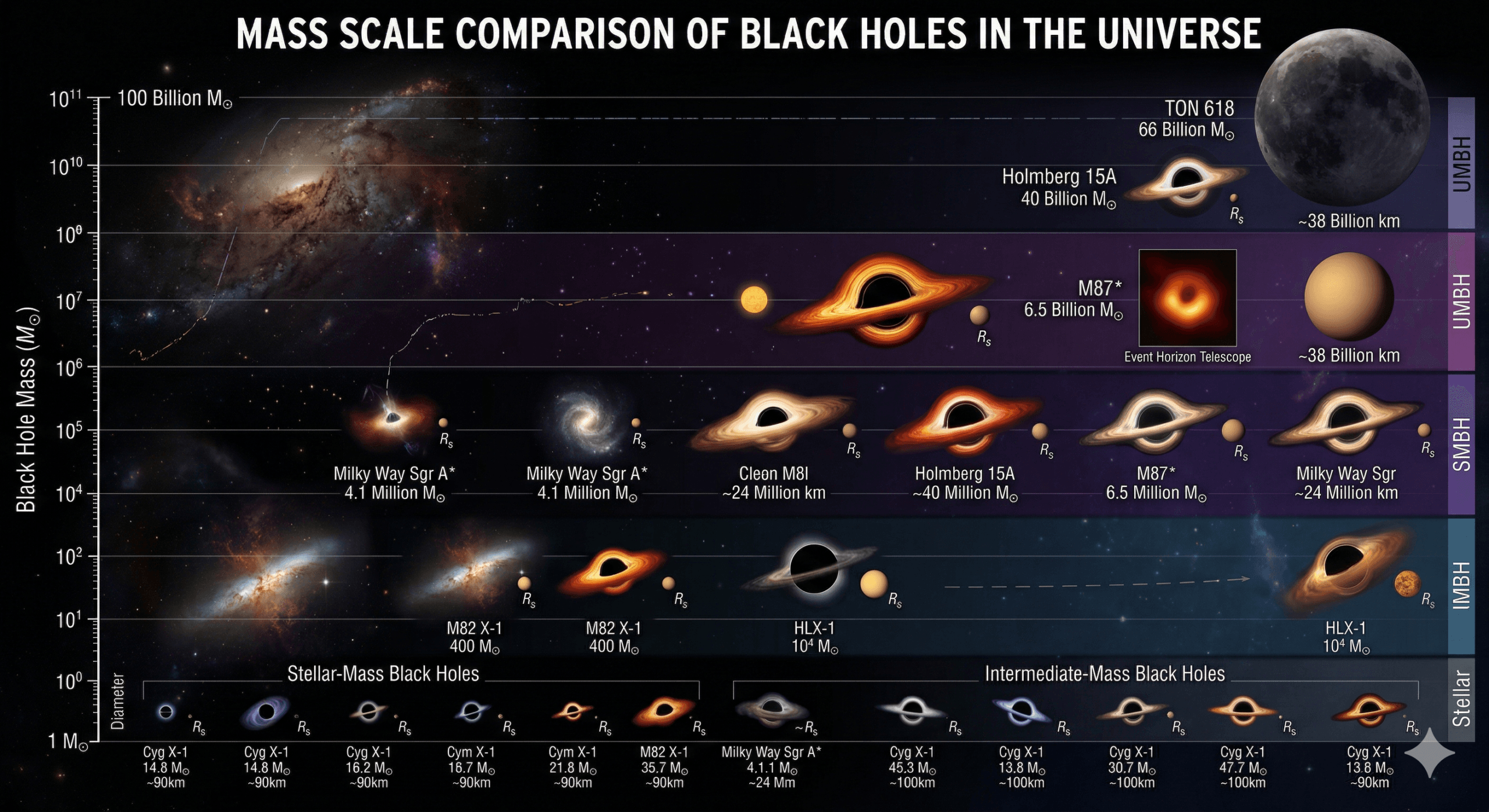
Neutron stars have their own maximum mass, analogous to the Chandrasekhar limit, called the Tolman–Oppenheimer–Volkoff (TOV) limit. The exact value depends on the equation of state of dense nuclear matter, which is uncertain, but observations and GW170817 constraints suggest it lies between roughly 2.0 and 2.3 solar masses. The pulsar PSR J0952-0607, measured in 2022, has a mass of approximately 2.35 ± 0.17 solar masses, pushing close to or at the upper bound. If a neutron star exceeds the TOV limit — through accretion or merger — it collapses into a black hole. Whether a short-lived hypermassive neutron star forms as an intermediate step depends on the merger dynamics and the equation of state.
To understand what happens beyond this limit, our article on the different types of black holes explains how stellar-mass black holes form and differ from their supermassive counterparts.
Cooling and Ultimate Fate
Both white dwarfs and neutron stars cool over time, but on very different timescales and through different mechanisms.
White dwarfs cool by radiating thermal energy from their surface. Because they are excellent insulators (the degenerate electron sea conducts heat efficiently internally, but the thin atmosphere limits surface emission), they cool slowly — over tens of billions of years. Theoretical models predict that sufficiently old white dwarfs should eventually cool to become black dwarfs: cold, dark, inert objects. However, the current age of the universe (~13.8 billion years) is not long enough for any black dwarf to have formed yet. The coolest observed white dwarfs have temperatures around 3,000–4,000 K, consistent with this cooling picture.
Neutron stars cool much faster initially, primarily through neutrino emission from their cores (the dominant cooling mechanism for the first ~10⁵ years), then through photon emission from the surface. Young neutron stars can have surface temperatures exceeding 10⁶ K, detectable in X-rays. After millions of years, isolated neutron stars cool below detectability. In binary systems, accretion can reheat the surface and produce X-ray bursts — thermonuclear explosions on the neutron star surface when accreted hydrogen and helium ignite.
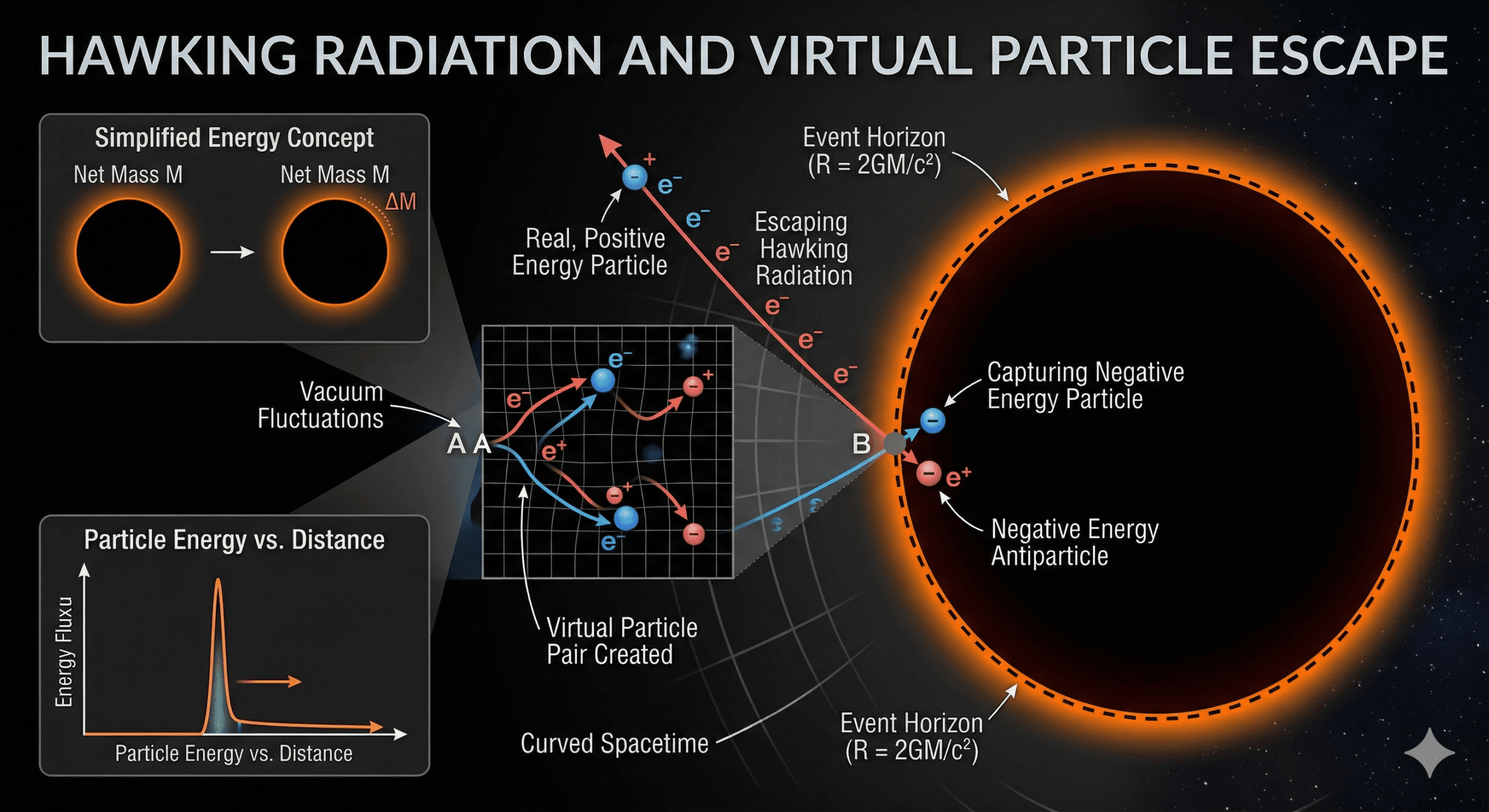
The concept of stellar remnant cooling connects naturally to questions about Hawking radiation and how black holes eventually lose energy — a related but distinct process operating on even longer timescales.
Role in the Universe: Nucleosynthesis and Gravitational Waves
White dwarfs and neutron stars are not merely passive remnants; they actively shape the chemical and physical evolution of the universe.
Type Ia supernovae from white dwarfs produce the bulk of the universe’s iron. Neutron star mergers (kilonovae), confirmed observationally by GW170817 and its optical counterpart AT2017gfo, are now established as a major — possibly dominant — site of r-process nucleosynthesis: the rapid neutron-capture process that produces roughly half of all elements heavier than iron, including gold, platinum, and uranium. The kilonova associated with GW170817 was estimated to have produced several Earth masses of gold. Core-collapse supernovae also contribute to r-process production, but the relative contributions of neutron star mergers versus supernovae remain an active research question.
Gravitational wave astronomy has opened an entirely new observational window on neutron stars. The LIGO-Virgo-KAGRA network has detected multiple compact binary merger events, and future detectors such as the Einstein Telescope and Cosmic Explorer are expected to detect thousands of neutron star mergers per year, dramatically improving constraints on the equation of state and the neutron star mass distribution.
Limitations and What We Still Don’t Know
Despite decades of observation and sophisticated theoretical modeling, significant uncertainties remain in our understanding of both types of remnant.
- Neutron star equation of state: The composition of neutron star cores — whether they contain hyperons, quark matter, or other exotic phases — is not known. Different equations of state predict different mass-radius relationships, and current observational constraints (from NICER X-ray timing and gravitational wave measurements) have narrowed but not resolved the question.
- The mass gap: Observations suggest a possible gap in compact object masses between roughly 2 and 5 solar masses, where neither neutron stars nor black holes are commonly found. Whether this gap is real or an observational artifact is debated.
- White dwarf crystallization details: While crystallization is observationally supported, the precise phase diagram of carbon-oxygen mixtures at white dwarf densities involves uncertainties, particularly regarding phase separation (whether carbon and oxygen separate during crystallization, which would affect cooling rates).
- Supernova progenitor systems for Type Ia: The single-degenerate (white dwarf + normal star) vs. double-degenerate (two white dwarfs) debate for Type Ia supernova progenitors has not been definitively resolved, which has implications for using them as cosmological standard candles.
- Pulsar emission mechanism: Despite decades of study, the detailed physics of how pulsars produce their beamed radio emission is not fully understood.
- Magnetar formation: Why some neutron stars become magnetars with ultra-strong fields while others do not is an open question, possibly related to rapid rotation during the supernova or dynamo processes in the proto-neutron star.
Key Takeaways
- White dwarfs form from low-to-intermediate mass stars (below ~8 M☉) and are supported by electron degeneracy pressure; neutron stars form from more massive stars via core-collapse supernovae and are supported primarily by neutron degeneracy pressure and the nuclear force.
- White dwarfs are roughly Earth-sized with densities of ~10⁶ g/cm³; neutron stars are city-sized with densities approaching 10¹⁵ g/cm³ — about 100 million times denser.
- White dwarfs have a maximum mass of ~1.4 M☉ (Chandrasekhar limit); neutron stars have a maximum of roughly 2.0–2.3 M☉ (TOV limit), above which they collapse to black holes.
- Neutron star mergers are a confirmed source of heavy elements including gold and platinum via r-process nucleosynthesis, and produce detectable gravitational waves.
- The internal structure of neutron star cores — potentially containing exotic matter — remains one of the most important unsolved problems in nuclear astrophysics.
- No black dwarf (a fully cooled white dwarf) yet exists; the universe is too young for one to have formed.
Frequently Asked Questions
Can a white dwarf become a neutron star?
Not directly through cooling. However, if a white dwarf in a binary system accretes enough mass to exceed the Chandrasekhar limit (~1.4 M☉), it may either explode as a Type Ia supernova or, in some theoretical scenarios, collapse into a neutron star. The supernova pathway is considered more common.
Which is denser, a neutron star or a white dwarf?
Neutron stars are vastly denser — by a factor of roughly 100 million to a billion. A white dwarf has a density around 10⁶ g/cm³; a neutron star reaches 10¹⁴–10¹⁵ g/cm³, comparable to atomic nuclei.
Do neutron stars eventually stop spinning?
Yes, isolated neutron stars gradually slow down as they lose rotational energy through magnetic dipole radiation. Over millions to billions of years, they spin down to the point where pulsar emission ceases. In binary systems, accretion can spin them back up to millisecond periods.
Will our Sun become a white dwarf?
Yes. In approximately 5 billion years, the Sun will exhaust its hydrogen fuel, expand into a red giant, expel its outer layers as a planetary nebula, and leave behind a white dwarf of roughly 0.5–0.6 solar masses.
What is the connection between neutron stars and gravitational waves?
When two neutron stars in a binary system spiral together and merge, they produce gravitational waves — ripples in spacetime — detectable by instruments like LIGO. The 2017 detection of GW170817 was the first confirmed neutron star merger observed in both gravitational waves and light, confirming neutron star mergers as a source of heavy elements and providing new tests of general relativity. For more on the physics of extreme gravity, see our article on how black holes really work.
Conclusion

The neutron stars vs white dwarfs comparison ultimately reflects two different answers to the same question: how much can gravity compress matter before something stops it? Electron quantum pressure draws the line for white dwarfs at roughly Earth’s size; nuclear forces and neutron quantum pressure draw it for neutron stars at the scale of a city. Beyond that, nothing stops the collapse, and a black hole forms. Both objects are extraordinary by any measure, and both continue to yield discoveries — from crystallization signatures in white dwarf populations to gravitational wave constraints on nuclear matter. The physics of stellar remnants is far from a closed chapter.
Sources and Further Reading
- NASA Chandra X-ray Center: Neutron Stars and Pulsars
- ESA Gaia: Evidence of Stars Solidifying in the Milky Way (White Dwarf Crystallization)
- NASA NICER Mission: Neutron Star Interior Composition Explorer
Editorial note: This article was prepared for educational purposes and should be read alongside the cited authoritative sources. Scientific evidence can change as new research becomes available.
Disclaimer: This article is provided for general educational and informational purposes only. It is not professional advice. Scientific knowledge can change as new evidence becomes available. Readers should verify important claims against the cited authoritative sources and use appropriate professional guidance when making decisions.